Português
 English
 Español
 Français
 Deutsch
 Italiano
 日本語
日本語
 العربية
 中文
中文
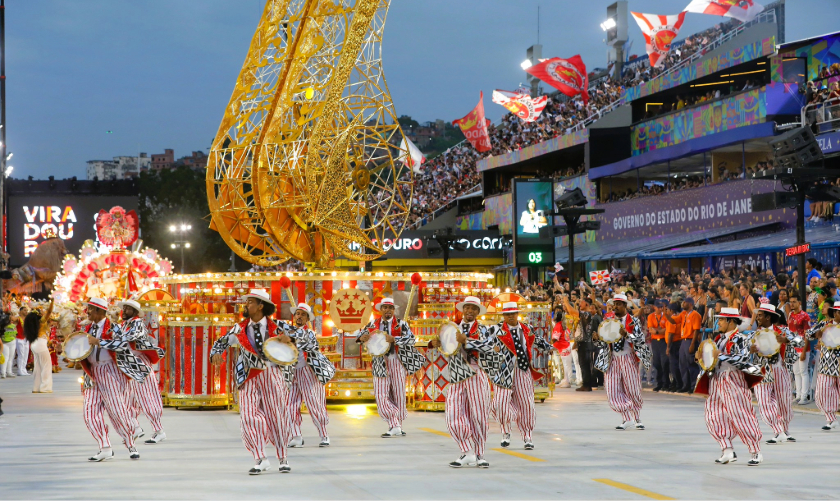
Carnival 2027 in Rio de Janeiro runs from February 5 to February 13. The Grupo Especial competitive parades take over the Sambódromo Marquês de Sapucaí on Sunday February 7, Monday February 8 and Tuesday February 9, with the Parade of Champions closing the cycle on Saturday February 13. For international tour operators selling Brazil, this is the most operationally complex week of the entire tourism calendar: hotel inventory blocks open more than a year in advance, parade ticket categories follow logic that surprises agents new to Brazil, and the difference between a smooth sale and a refund nightmare often comes down to decisions made nine to twelve months out.
If you are an international agent or tour operator selling Rio Carnival 2027 to end clients, the decisions that matter most happen between June 2026 and September 2026, not in December. This guide walks through the official 2027 calendar, the actual structure of the Sambódromo, the five ticket tiers that exist and who they fit, the booking windows that international agents systematically miss, and the operational realities that only become visible during parade nights.
The 2027 Calendar at a Glance
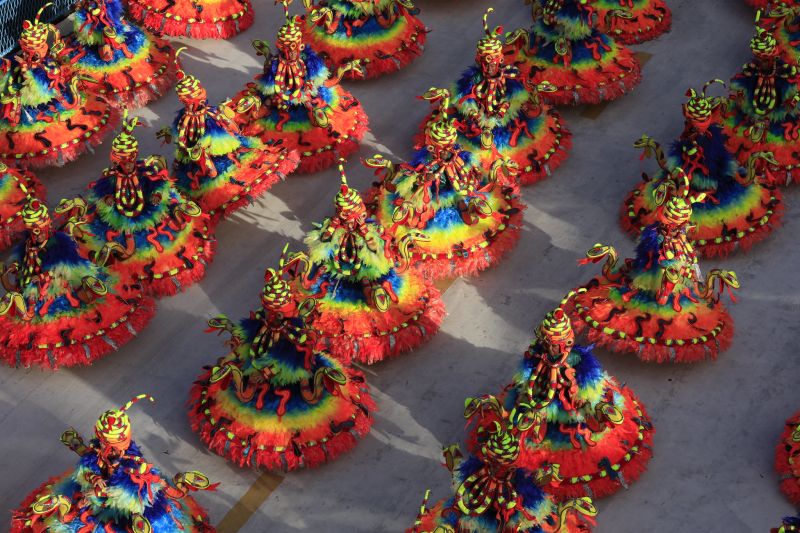
Photo: Marco Terranova / Riotur
The Liga Independente das Escolas de Samba (Liesa) confirmed the 2027 calendar on April 16, 2026, when the official draw established the order of parades during a ceremony at Cidade do Samba. Twelve schools compete across three nights of the Grupo Especial, in the same format used in 2026. A proposal to expand to fifteen schools by 2030 was discussed but has not been implemented for 2027.
Grupo Especial Parade Schedule
| Sunday, February 7, 2027 | União de Maricá, Beija-Flor de Nilópolis, Paraíso do Tuiuti, Unidos de Vila Isabel |
| Monday, February 8, 2027 | Mocidade Independente de Padre Miguel, Unidos da Tijuca, Acadêmicos do Salgueiro, Imperatriz Leopoldinense |
| Tuesday, February 9, 2027 | Portela, Unidos do Viradouro, Acadêmicos do Grande Rio, Estação Primeira de Mangueira |
| Saturday, February 13, 2027 | Parade of Champions (top six schools of the Grupo Especial) |
Why the Order Matters for Your Sale
Three positions in the draw are fixed by Liesa regulation, not by random sorting. The Série Ouro champion (União de Maricá in 2027) opens Sunday. The penultimate placement from the previous year (Mocidade) opens Monday. The team that finished tenth (Portela) opens Tuesday. The remaining nine schools were sorted in trincas, meaning groups of three, with positions defined through a presidents' plenary before the public draw.
For agents selling premium packages, this matters: the schools considered most spectacular by international audiences (Mangueira, Viradouro, Salgueiro, Beija-Flor) are distributed across all three nights. There is no single best night anymore. The Parade of Champions on Saturday February 13 condenses the top six schools into one show, which makes it the highest-pressure ticket of the cycle and often the first to sell out at premium tiers.
How the Sambódromo Is Actually Structured
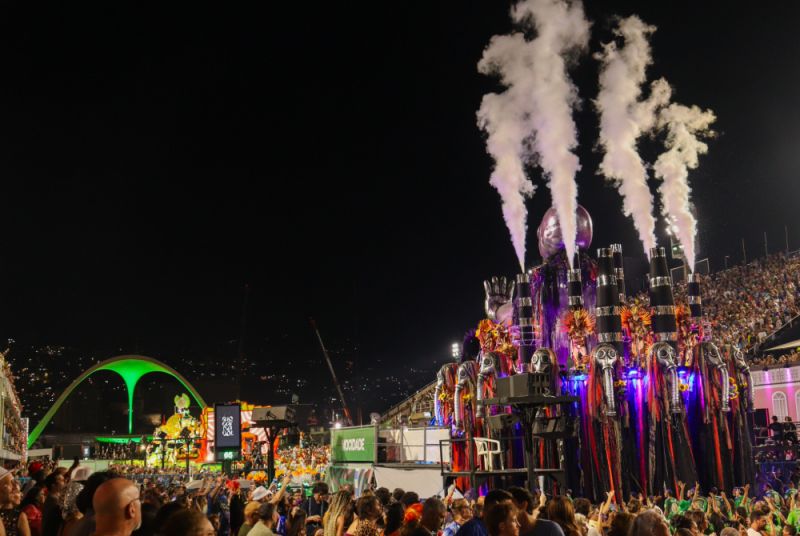
Photo: Guilherme Ferreira / Blumar DMC
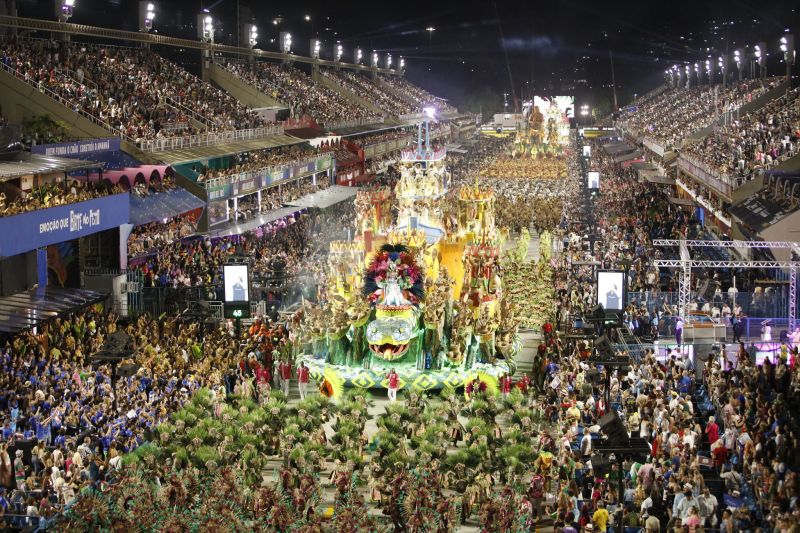
The Sambódromo Marquês de Sapucaí is 700 meters long. The parade strip itself is 13 meters wide. The audience is distributed across twelve numbered sectors, arranged on both sides of the runway. This sector logic governs everything about pricing, sightlines, atmosphere and how international agents should match tickets to client profiles.
Even-Numbered Sectors (Right Side)
Sectors 02, 04, 06, 08 and 10 sit on the right side of the runway as schools enter. Sector 02 is closest to the Concentração, where schools assemble before parading. Sector 10 is closest to the Apoteose, where parades conclude. The right side hosts most of the premium private camarotes and is generally where the international corporate hospitality flows.
Odd-Numbered Sectors (Left Side)
Sectors 03, 05, 07, 09 and 11 sit on the left side. Sector 09 is the only sector with numbered grandstand seats, and it has a reputation as the most animated section of the Avenue: this is where many Brazilian samba enthusiasts choose to be, and the energy carries through the night. For agents selling experience-driven packages to clients who specifically want immersion in Brazilian crowd culture, Sector 09 grandstand is often the right answer.
Sector 07 and 09: The Judges' Sector
Sector 07 sits directly opposite the judges' cabin. For clients who care about understanding the competitive aspect of the parade (which school is being evaluated on which criterion, where the bateria stops for its homage), this is the analytical viewpoint. Sector 09 sits adjacent and offers a similar perspective with slightly different sightlines.
Sector 13: The Apoteose
Sector 13 closes the runway at the Praça da Apoteose. This is where schools finish their parade and where the energy peaks for the floats and the front commission. Tickets in Sector 13 are usually more accessible in price but the night ends here, with celebrations and informal afterparties spilling into the surrounding plaza.
Inventory Tiers Explained
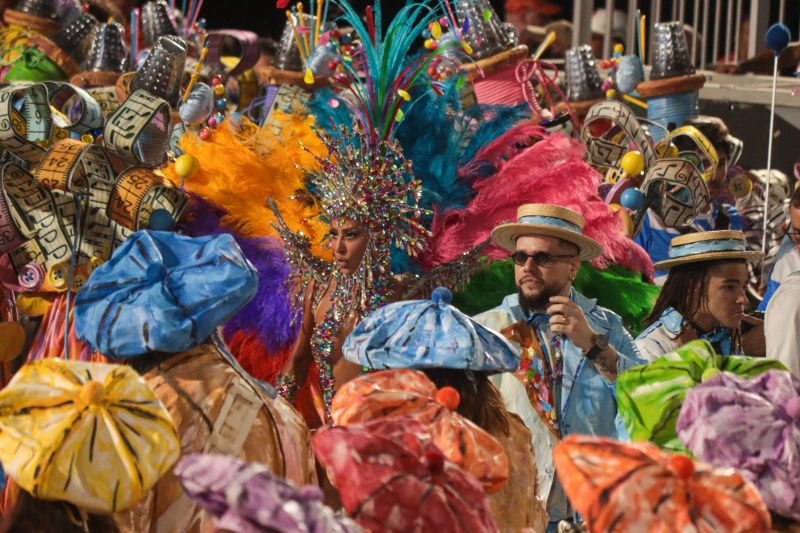
Photo: Guilherme Ferreira / Blumar DMC
International agents often arrive expecting a simple ticket structure and discover five distinct product tiers, each sold through different channels, with different release windows, different cancellation rules and different fit for different client profiles. Understanding this taxonomy is what separates a fluent Brazil seller from a generalist.
1. Arquibancada (Grandstand)
The most accessible tier. Open seating on tiered benches behind the frisas. No food, no drinks included, no climate control. Audience is mixed: Brazilian families, international backpackers, samba enthusiasts. Sector 09 is numbered; all others are open seating, meaning early arrival is required to claim a good spot. Price range for the 2026 cycle was R$ 120 to R$ 300 per night for full tickets. Ideal client profile: young travelers, budget-conscious international tourists, those who want to be inside the Brazilian crowd rather than separated from it.
2. Frisa
Twelve-seat boxes located in front of the grandstands, closer to the parade strip. Dimensions are 2.50 meters across the front by 6.00 meters deep. Sectors 03, 05, 07, 09, 10 and 11 contain frisas. Closed seating, sold as full box or by individual seat depending on the operator. No food or drink included in the base ticket. Fila A (front row) of any frisa is the closest legal viewing point to the parade strip. Ideal client profile: small groups (six to twelve people), couples who want proximity without the open-bar party format, photographers and journalists.
3. Cadeira Individual (Individual Chair)
Limited to certain sectors. Individual numbered chairs at intermediate elevation. Closed seating but no food or drinks. Less common than grandstand or frisa, sometimes overlooked by international agents because Liesa lists them less prominently. Ideal client profile: solo travelers or pairs who want a guaranteed numbered seat without committing to a full frisa or to a camarote price point.
4. Camarote (Private Box)
Private hospitality boxes operated by commercial sponsors, not by Liesa directly. The camarote operator leases space from Liesa, builds the structure each year, contracts catering, books artists for between-parade entertainment, and sells tickets independently. Open-bar and open-food are standard. Programming typically includes well-known Brazilian artists performing during the intervals between schools. For the 2026 cycle, individual camarote tickets ranged from R$ 1,250 to over R$ 6,485 depending on the operator, the night and the booking window. Ideal client profile: corporate hospitality, incentive groups, luxury leisure clients, anyone who wants the experience curated rather than navigated.
5. Super-Camarote
The premium tier of camarotes, located in sectors 02A, 04A, 06A, 08A on the even side and 03A, 05A, 07A, 09A on the odd side. These occupy positions directly above the main camarotes with elevated sightlines. Capacity per super-camarote varies by operator but is generally smaller than the main camarote below. Pricing reaches the upper bound of the parade ticket market and is typically packaged with multi-night access. Ideal client profile: VIP hospitality, head-of-state visits, premium incentive travel for executive groups.
The Booking Timeline That Catches International Agents Off Guard
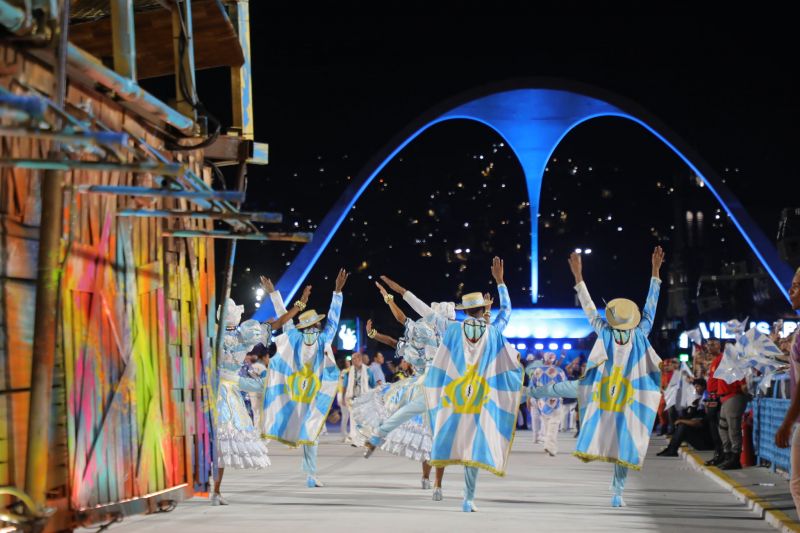
Photo: Alexandre Macieira / Riotur
Brazilian Carnival inventory operates on a calendar that international agents often discover too late. The window that matters most opens in March of the year preceding Carnival, not in October or November as some agents assume based on European or North American event-booking norms.
March of the Previous Year: Official Liesa Pre-Sales Open
For Carnival 2027, Liesa opened the Ingresso Sambista pre-sale modality in March 2026, offering arquibancada tickets at R$ 230 full price (R$ 115 half price) with the right to choose the parade day after the order draw was completed. The Passaporte 3 Dias (full three-day pass) for the Grupo Especial opened sales on March 9, 2026, exclusively through Ticketmaster Brazil. International agents who assumed they had until late 2026 to start blocking inventory entered the cycle nine months behind the Brazilian-facing demand.
April to June: Camarote Operators Release Inventory
Private camarote operators begin releasing tickets between April and June of the year before Carnival. Early-bird pricing is genuinely cheaper than mid-cycle pricing, sometimes by 30 to 40 percent. This is the window where smart international agents secure premium hospitality at workable margins. By July, the same camarote space at the same operator typically costs significantly more.
July to October: The Hotel Inventory Wall
Hotels in Copacabana, Ipanema, Leblon and Barra da Tijuca operate Carnival weeks on minimum-stay policies (commonly five to seven nights), pre-paid non-refundable terms, and pricing multipliers between three and five times the low-season rate. The blocks that DMCs hold with hotels are negotiated up to thirteen months in advance, which means that an international agent reaching out in November expecting room availability for a group of twenty in Copacabana will face either no inventory or third-party reseller rates with their own markups stacked on top.
November to January: Crisis-Mode Pricing
From November onward, what remains in the market is what nobody else wanted. Last-minute parade tickets do exist but at price points that no longer make commercial sense for most agents. The exception is unsold camarote inventory that occasionally appears in late January as operators clear stock, but counting on this is not a strategy. It is a fallback.
February: Operations, Not Sales
By February the sales window is closed. The work in February is operational: ticket distribution to clients, transfer logistics, hotel check-in coordination, on-the-ground support during parade nights. International agents who try to add new bookings in February are typically declined or quoted at retail walk-up prices through unofficial channels.
Logistics Around the Sambódromo on Parade Nights
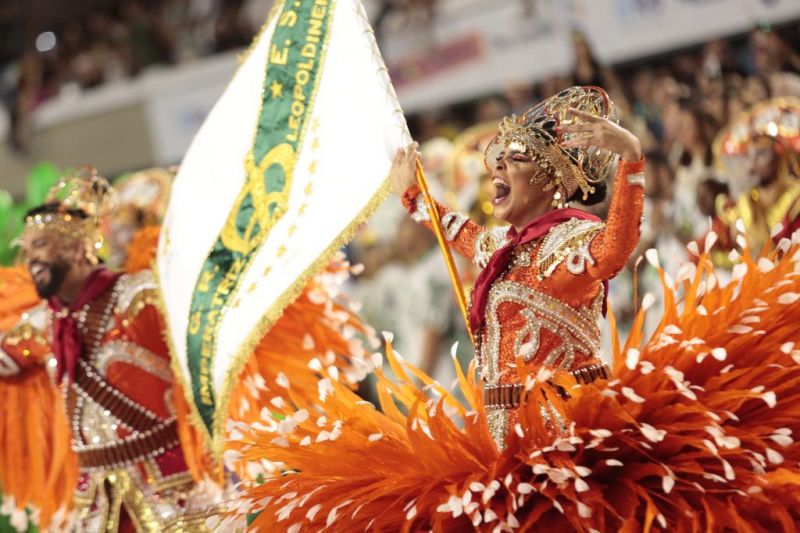
Photo: Alexandre Macieira / Riotur
Parade nights are operationally distinct from any other tourism night in Rio. Streets in the Cidade Nova area (Avenida Presidente Vargas, Rua Frei Caneca, the entire perimeter of the Sambódromo) are closed to private vehicles from late afternoon onward. The closures extend further than international agents expect. Drop-off points are limited and require credentialed transfer operations to function.
Approach Windows
Parades begin at 22:00 (10:00 PM) and run until approximately 06:00 (6:00 AM) the following morning. Schools take roughly 65 to 80 minutes each to complete the runway. Audience access begins at 20:00 (8:00 PM) and the recommended arrival window is between 19:00 and 21:00. Arriving after 22:30 means navigating dense pedestrian flows against the direction of incoming spectators.
Transport from Zona Sul
The two metro stations closest to the Sambódromo are Praça Onze (sector entrance for ímpar sectors 03, 05, 07, 09, 11) and Central (sector entrance for par sectors 02, 04, 06, 08, 10, 13). During Carnival, metro service operates extended hours including overnight on parade nights. For clients in Copacabana, Ipanema and Leblon, transfer by metro is realistic but requires a 35 to 50 minute window each way and the willingness to walk the final 800 meters from station to sector entrance.
Private transfer is the standard for camarote tickets and any premium product. Transfer operators with Sambódromo credentials use designated drop-off points; non-credentialed vehicles cannot approach beyond a perimeter that is typically several blocks from the entrance gates. For groups staying in Barra da Tijuca, transport time runs 60 to 90 minutes each way depending on the night and traffic flow.
Egress After Parades
Egress at 06:00 in the morning is its own operation. Crowds disperse simultaneously, metro stations face peak capacity, and ride-share apps are typically unavailable or surge-priced in the immediate vicinity. Pre-arranged transfer with a confirmed pickup point and a credentialed operator is the difference between a smooth return and a two-hour delay in the cold morning air.
Common Mistakes International Agents Make When Selling Carnival Rio
- Treating all three nights as interchangeable. They are not. The school lineup, the energy, the operational risk and the pricing differ significantly. Sell the night, not just the ticket.
- Booking arquibancada for clients expecting a comfortable seated experience. Arquibancada is a participation experience, not a viewing experience. Clients who expected the latter and received the former generate refund requests that no DMC can prevent.
- Underestimating minimum-stay hotel requirements. A three-night Carnival visit is operationally difficult to sell because most Zona Sul hotels require five to seven night minimums during Carnival week. Plan itineraries around this from the outset.
- Promising camarote ticket inventory before securing it. Camarote operators do not honor verbal holds. A signed deposit is the only thing that secures inventory. Selling first and securing later is how international agents end up paying retail in January.
- Assuming visa-free entry covers all client nationalities. Visa rules for Brazil have shifted several times between 2023 and 2026. Verify entry requirements per client nationality before confirming bookings. The e-Visa platform applies to certain nationalities and not others, and details should be confirmed with the Brazilian consulate at booking time.
- Ignoring the Quarta de Cinzas (Ash Wednesday) recovery day. Ash Wednesday in Brazil is the day after Tuesday's Grupo Especial parade. Many services in Rio operate on reduced hours or remain closed. Build this into the itinerary as a rest day, not as a touring day.
- Booking parade tickets without confirmed transfer. A R$ 4,000 camarote ticket is worthless if the client cannot physically reach the venue. Transfer must be confirmed at the same moment as the ticket.
- Selling Parade of Champions as an afterthought. The Saturday February 13 Parade of Champions is increasingly the most-requested night by international clients because it condenses the top six schools into one show. Price and availability move quickly. Treat it as a primary product, not a secondary add-on.
Final Thoughts
Selling Rio Carnival to international clients is not a transactional product the way many tour packages are. It is an operational sequence that begins almost a full year before the parade and that depends on decisions made under pressure, with incomplete information, in a market that prices Brazilian demand above international demand. Agents who treat Carnival as a year-round operation, plan inventory blocks ten to twelve months in advance, and partner with Brazil-based ground operators who handle the Sambódromo every year tend to deliver smoother client experiences and stronger margins than those who treat it as a seasonal scramble. Blumar operates Rio Carnival every cycle, has done so for four decades, and remains available for agents and operators who want to coordinate inventory, transfers and on-the-ground support for the 2027 cycle.
Posts you might also be interested in:
- Incoming Operator Brazil: Why Blumar Is the Right Partner
- 11 Must-See Attractions in Rio de Janeiro
- Carnival in Salvador: All You Need to Know
- Carnival in Olinda: All You Need to Know
- Destination Management Company Brazil
Frequently Asked Questions - Rio Carnival 2027
When do parade tickets for Carnival 2027 go on sale?
Liesa opened the Ingresso Sambista pre-sale in March 2026. The Passaporte 3 Dias for the Grupo Especial opened on March 9, 2026 through Ticketmaster Brazil. Private camarote operators began releasing inventory between April and June 2026. For 2028 cycles, expect similar timing: pre-sales open approximately eleven months before Carnival week.
What is the price difference between arquibancada and camarote tickets?
Based on the 2026 cycle, arquibancada tickets ranged from R$ 120 to R$ 300 per night, while private camarote tickets ranged from R$ 1,250 to over R$ 6,485 per night depending on the operator, the day and the booking window. The price difference reflects fundamentally different products: viewing access versus full hospitality with open-bar, open-food and live entertainment.
Can children attend the Sambódromo?
Yes. Children five years and older pay tickets and qualify for half-price entry in arquibancada especial, arquibancada popular and cadeira individual sectors when accompanied by parents or legal guardians. Children under sixteen years must be accompanied by a parent or legal guardian. Authorities may request a birth certificate for verification.
How many schools parade in the Grupo Especial?
Twelve schools compete in the Grupo Especial across three nights (Sunday, Monday, Tuesday) in 2027. A proposal to expand to fifteen schools by 2030 has been discussed but is not in effect for 2027.
What is the Desfile das Campeãs?
The Desfile das Campeãs (Parade of Champions) is the closing event of the Grupo Especial cycle. It happens on the Saturday following Tuesday's competitive parades. In 2027, this falls on February 13. The top six schools from the Grupo Especial competition parade again, this time as a celebratory exhibition rather than a competitive event. For many international clients, this is the most accessible single-night experience because it condenses the top performances of the cycle.
Are the parades broadcast live?
Yes. Globo and other Brazilian broadcasters carry live coverage of all Grupo Especial parade nights. International streaming options are inconsistent and change year to year. For clients who cannot attend, live broadcast is the closest alternative.
What happens if a parade is rained out?
The Sambódromo is open-air and parades continue in rain. Tickets are not refundable for weather. Heavy rain can affect float operation and audio quality but does not stop the competition. Clients should be advised to bring rain protection and plan accordingly.
Can clients change parade nights after purchase?
For the Ingresso Sambista modality, clients select their day after the official order draw is published. For standard tickets purchased after the draw, changes between days are generally not permitted by Liesa. For camarote tickets, change policies vary by operator and are typically more restrictive than standard ticket policies.
What documentation do international clients need to enter the Sambódromo?
Clients need their parade ticket and a valid photo identification document. For international clients, passport is the accepted form of identification. Tickets purchased online are typically issued as electronic vouchers that need to be exchanged for physical wristbands or paper tickets at designated locations before parade nights. Operators provide instructions specific to each ticket category.
Is there alcohol available inside the Sambódromo?
Beverages including beer, water, soft drinks and juice are sold inside arquibancada sectors. Spectators may bring up to two plastic containers of 500ml each (water, juice, soft drink or beer) and up to two food items (fruit, pastry or sandwich). Glass containers, coolers, sharp objects and weapons are prohibited. Camarote sectors include open-bar service as part of the ticket.
How early should international clients arrive at the Sambódromo?
Doors typically open at 20:00 (8:00 PM). Parades begin at 22:00 (10:00 PM). Recommended arrival is between 19:00 and 21:00 to allow time for entry security, sector navigation and settling in before the first school. Arriving after 22:30 means navigating against incoming pedestrian flows and missing the opening parade.
What is the parade order for Carnival 2027?
Sunday February 7: União de Maricá, Beija-Flor, Paraíso do Tuiuti, Unidos de Vila Isabel. Monday February 8: Mocidade, Unidos da Tijuca, Salgueiro, Imperatriz Leopoldinense. Tuesday February 9: Portela, Viradouro, Grande Rio, Mangueira. The Parade of Champions on Saturday February 13 features the six highest-scoring schools from the competitive nights.