Português
 English
 Español
 Français
 Deutsch
 Italiano
 日本語
 العربية
 中文
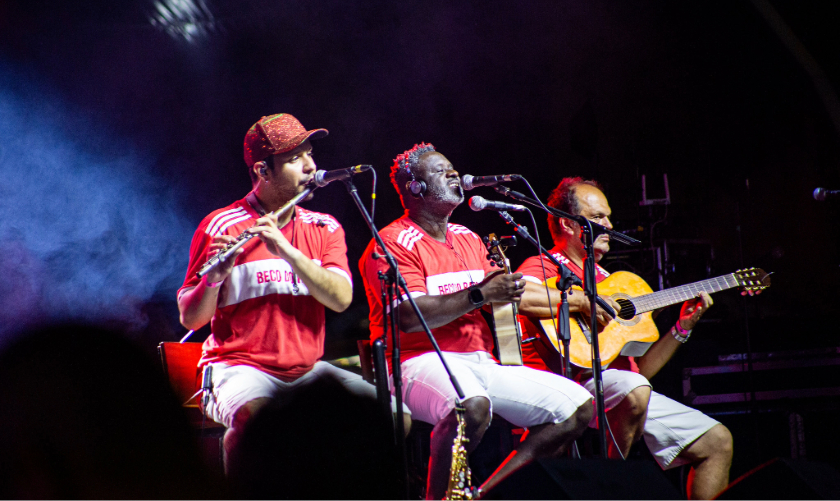
Rio de Janeiro has a soundtrack that captivates locals and visitors from around the world. Simply stroll through the streets of Lapa, visit the bars around Pedra do Sal, or explore the musical gatherings in the city's North Zone to realize that music is an essential part of Rio's identity.
When it comes to Samba, Pagode, and Choro in Rio, the city offers experiences that go far beyond attending a live music performance. These gatherings celebrate Brazilian culture, preserve traditions, and turn an ordinary evening into an unforgettable memory.
As the birthplace of important musical movements, Rio is home to historic samba circles, live music venues, traditional bars, and cultural spaces where seasoned musicians share the stage with emerging talent.
From traditional samba to contemporary pagode and the instrumental sophistication of choro, each rhythm reveals a different side of the city.
For travelers looking to experience the true spirit of Rio, including these musical experiences in their itinerary is an excellent way to discover the city beyond its beaches and famous landmarks.
In this guide, you'll discover the most traditional and lively places to enjoy Samba, Pagode, and Choro in Rio, learn fascinating facts about these musical genres, and find practical tips for an authentic experience with the expert travel planning services of Blumar DMC.
Samba, Pagode, and Choro in Rio: A Tradition Spanning Generations
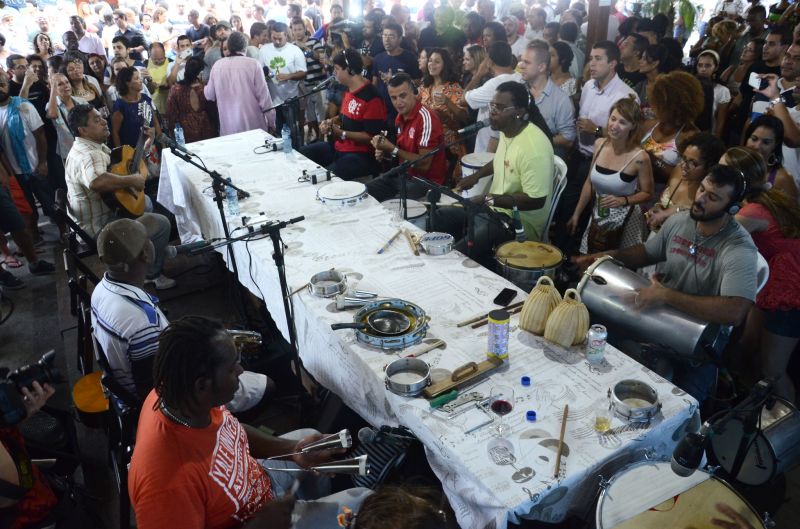
Photo: Alexandre Macieira / Riotur
Rio de Janeiro's musical history is deeply connected to the development of Brazilian culture. African, European, and local cultural influences came together over the centuries, giving rise to musical expressions that became national symbols.
Samba, pagode, and choro share instruments, social spaces, and a strong connection to the everyday lives of Rio's residents, known as cariocas. However, each genre has its own distinctive characteristics.
Samba: The Musical Soul of Rio de Janeiro
Samba is one of Brazil's most internationally recognized cultural expressions. Its development in Rio de Janeiro took place primarily between the late 19th and early 20th centuries, in communities where Black Brazilians, musicians, and working-class residents gathered and shared their musical traditions.
The area known as Pequena África (Little Africa), which includes parts of the Saúde and Gamboa neighborhoods, played a fundamental role in this process.
In 1917, the recording of Pelo Telefone, associated with Donga and Mauro de Almeida, became a milestone in samba's commercial history, although its origins and authorship reflect a broader collective musical tradition.
Over the decades, the genre evolved into several styles, including samba de roda, partido-alto, samba-enredo, and samba de raiz.
In 2007, Brazil's National Institute of Historic and Artistic Heritage (IPHAN) officially recognized the Matrizes do Samba no Rio de Janeiro (Traditional Forms of Samba in Rio de Janeiro)—partido-alto, samba de terreiro, and samba-enredo—as Brazilian Cultural Heritage.
Pagode: Joy, Community, and Music
Pagode is closely associated with informal gatherings of samba musicians. During the 1970s and 1980s, the term gained popularity as the name of a musical style characterized by relaxed samba circles and innovative arrangements.
One of the most important movements emerged in the Ramos neighborhood, particularly during gatherings organized by the traditional carnival group Cacique de Ramos.
It was in this environment that musicians associated with the group Fundo de Quintal helped popularize instruments such as the tantã, repique de mão, and a banjo adapted for samba.
Pagode later spread throughout Brazil, with groups and performers transforming it into one of the country's most popular musical genres.
Today, Rio offers everything from intimate pagode gatherings to large-scale events dedicated to the genre.
Choro: Elegance, Virtuosity, and Brazilian Musical Tradition
Considered one of Brazil's earliest distinctly Brazilian urban instrumental music genres, choro emerged in Rio de Janeiro during the 19th century.
Its distinctive sound combines European musical influences, Afro-Brazilian rhythms, and a uniquely Brazilian approach to interpreting melodies.
Instruments such as the flute, mandolin, cavaquinho, seven-string guitar, and pandeiro are essential to traditional choro circles.
Some of the genre's most celebrated figures include Pixinguinha, Jacob do Bandolim, Ernesto Nazareth, and Chiquinha Gonzaga.
In 2024, choro was officially recognized by IPHAN as Brazilian Cultural Heritage, reinforcing its importance to the country's musical history.
For visitors, attending a choro circle offers an opportunity to discover a more intimate and sophisticated side of Brazilian music.
According to a survey released by Riotur in December 2024, Rio de Janeiro had more than 150 samba circles taking place in public spaces, demonstrating the vitality of this musical tradition.
Where to Enjoy Samba, Pagode, and Choro in Rio de Janeiro
We've selected some of the city's most iconic venues and cultural experiences, representing different styles of Rio's musical heritage. There are options for travelers who enjoy historic settings, outdoor samba circles, live music venues, and more intimate gatherings.
1. Pedra do Sal: One of the Birthplaces of Rio's Samba Tradition
Ver post no Instagram
Located in the Saúde neighborhood, within Rio's Port Zone, Pedra do Sal is one of the city's most emblematic places for anyone interested in discovering the history of samba.
The site is part of Little Africa, an area that played a fundamental role in the development of Afro-Brazilian culture in Rio de Janeiro.
Its cobblestone streets, historic buildings, and musical gatherings create an atmosphere that connects the past with the present.
Traditional samba circles are particularly popular on Mondays, when musicians and visitors gather outdoors to sing Brazilian samba classics.
The repertoire often includes songs by legendary artists such as Cartola, Nelson Cavaquinho, Paulinho da Viola, and Zeca Pagodinho.
Why visit? Pedra do Sal offers an authentic cultural experience in a historic setting that preserves the heritage of Rio's Black communities and the origins of the city's urban samba tradition.
2. Rio Scenarium: Music, Dancing, and History Under One Roof
Ver post no Instagram
Rio Scenarium is one of the best-known venues in Rio de Janeiro's nightlife scene.
Housed in a historic mansion on Rua do Lavradio, the establishment combines live Brazilian music, dining, and an extraordinary collection of antiques.
Spread across three floors and seven distinct spaces, the venue offers different perspectives of the performances and the lively atmosphere.
Its musical program features samba, gafieira-style dance music, and other Brazilian popular music genres. Depending on the evening, visitors may also enjoy performances celebrating choro.
One of its main attractions is the opportunity to combine dinner, live music, and dancing in a single location.
Why visit? Rio Scenarium is an excellent choice for travelers seeking a lively evening with the amenities of an established entertainment venue and a distinctly carioca atmosphere.
3. Carioca da Gema: The Charm of Samba in Lapa
Ver post no Instagram
Located on the traditional Avenida Mem de Sá, Carioca da Gema is one of the venues associated with the celebration and preservation of Brazilian music in Lapa.
The establishment earned its place in Rio's cultural scene by offering samba, choro, and Brazilian popular music (MPB) performances in a welcoming setting.
Visitors can enjoy a relaxed atmosphere, with musicians performing close to the audience and a repertoire that frequently highlights some of Brazil's greatest composers.
It's the kind of place where the music invites everyone to sing along, dance, and enjoy the evening at their own pace.
Why visit? For its combination of musical tradition, bohemian atmosphere, and excellent location for exploring Lapa.
4. Beco do Rato: Traditional Samba and a Relaxed Atmosphere
Ver post no Instagram
For travelers seeking a lively experience with close interaction between musicians and the audience, Beco do Rato is an excellent option.
Located on Rua Joaquim Silva in Lapa, the venue is known for its samba circles and informal atmosphere, where the audience actively participates in the performances.
Its repertoire typically celebrates samba de raiz, or traditional samba, featuring interpretations of songs by composers who shaped the genre's history.
The close connection between performers and visitors is one of its greatest attractions. Rather than simply watching a show, guests feel like part of the samba circle.
In addition to live music, the establishment serves drinks and Brazilian bar snacks that complement the experience.
Why visit? It's ideal for those who appreciate traditional samba, lively settings, and spontaneous musical gatherings.