
Photo: Irlen Menezes / Blumar DMC
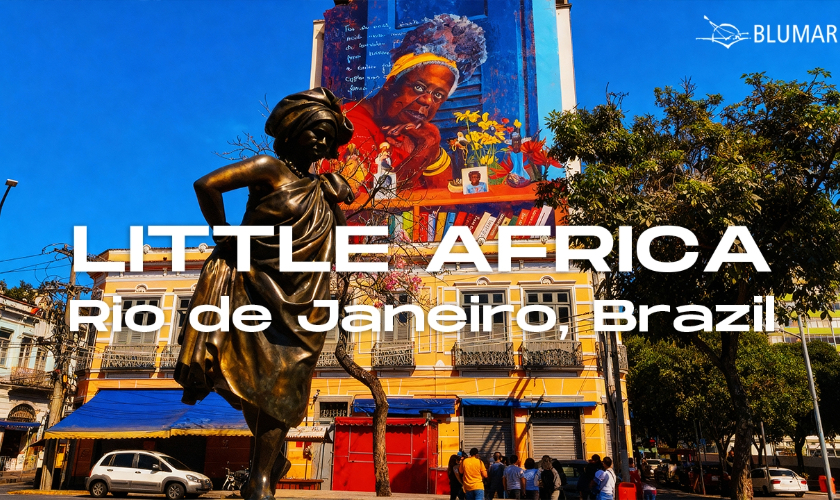
Traveling is also a journey into the soul of every destination. And few experiences in Rio de Janeiro carry as much cultural strength as exploring Little Africa with Blumar DMC, a territory that preserves the memories, traditions, and resistance of the Afro-Brazilian people. If you’re looking for an authentic, historical, and emotionally powerful experience, the Little Africa tour is the ideal gateway to understanding Rio’s cultural formation and its deep-rooted heritage.
In this post, you will discover every detail of this itinerary, learn about the historical impact of the region, and understand why Blumar DMC is the right choice to guide you through this transformative journey.
What is Little Africa with Blumar DMC and why visit it through the Little Africa tour by Blumar DMC
Located in Rio’s port district, Little Africa with Blumar DMC encompasses some of the most important landmarks of the African diaspora in the Americas. According to Brazil’s National Institute of Historic and Artistic Heritage (IPHAN), Valongo Wharf is the largest and most significant archaeological site related to the transatlantic slave trade in the continent, recognized by UNESCO as a World Heritage Site. This makes the area an essential destination for anyone who wants to understand Brazil’s history and its Afro-descendant heritage.
The Little Africa tour with Blumar guides visitors through a four-hour route filled with history, music, street art, and sensory experiences that connect past and present.
Detailed itinerary of Little Africa
The tour begins at one of Rio’s modern postcards. Mauá Square was revitalized through the Porto Maravilha project and now features museums, sculptures, and an ideal backdrop to introduce the region’s narrative. Here, visitors can immediately perceive the urban transformation that embraced memory and cultural identity.
Valongo Wharf: The entry point for millions of Africans:

Photo: Irlen Menezes / Blumar DMC
The most impactful stop of the tour. Between 1811 and 1831, according to studies from the Federal University of Rio de Janeiro (UFRJ), more than one million enslaved Africans disembarked in this area. Walking through this site means acknowledging the pain, strength, and legacy left by those lives that shaped the Brazil we know today.
Street art, resistance, and the community’s voice

Photo: Guilherme Ferreira / Blumar DMC
Throughout the journey, murals and sculptures tell silent stories of identity, ancestry, and struggle. These artworks are part of local cultural initiatives and help preserve the collective memory of the territory.
Pedra do Sal: Birthplace of the samba roda

Photo: Guilherme Ferreira / Blumar DMC
Considered a cultural heritage site of Rio, Pedra do Sal is one of the birthplaces of Brazilian music. Traditional samba gatherings emerged there, influencing Rio’s Carnival, samba de raiz, and expressions such as jongo and capoeira.
MUHCAB – Museum of Afro-Brazilian History and Culture

Photo: Guilherme Ferreira / Blumar DMC
The Little Africa tour includes entrance to MUHCAB (closed on Mondays), where visitors can explore exhibitions that deepen their understanding of Afro-Brazilian formation in Rio and across the country.
Practical information about the Little Africa tour

Photo: Guilherme Ferreira / Blumar DMC
-
Location: Port District of Rio de Janeiro
-
Duration: Approximately 4 hours
-
Includes: Private transportation, specialist guide, and admission to MUHCAB
-
Languages: English, Spanish, French, and Italian
-
Mobility level: Moderate 1.2 km walk, adaptable for wheelchair users
-
Ideal for: Families, history lovers, cultural travelers
-
Recommendations: Wear light clothing, comfortable shoes, sunscreen, and a hat
-
Weather policy: Route adjusted in case of rain
Why experience Little Africa with Blumar

Photo: Guilherme Ferreira / Blumar DMC
Choosing Blumar DMC ensures a journey led by professionals who deeply understand Brazilian culture and work with historically responsible and respectful curation. The company has decades of expertise in specialized travel throughout Brazil and is recognized for:
✔ Expertise in cultural itineraries
Specialized, well-trained guides ensure that all information shared is accurate, up-to-date, and handled with sensitivity.
✔ A reliable network of suppliers
Blumar works with high-quality partners, ensuring excellence in transportation, accessibility, and service from the very first contact.
✔ Complete personalization
Every itinerary can be adapted according to your interests, availability, and traveler profile.
✔ Authenticity at the core
The Little Africa tour was designed based on research, studies, and dialogues with cultural leaders in the region, guaranteeing a meaningful and genuine experience.
Feedback from international travelers reinforces Blumar’s credibility, highlighting the depth of the experience and the professionalism of the team. Reviews frequently mention the sensitivity of the tour and the emotional impact visitors feel afterward.
Experience the history of Rio through the Little Africa tour
Exploring Little Africa means embracing the true soul of Rio de Janeiro. It is an educational, emotional, and essential experience for anyone who wants to go beyond the obvious and engage with Brazil in a profound way.
The Little Africa tour combines history, culture, and memory in a transformative path that reshapes the way we understand the city.
Take the opportunity to discover other cultural itineraries and create a tailor-made trip just for you.
Posts you might also be interested in:
- Exclusive Travel Experiences. Discover Brazil Like Never Before with Blumar
- Destination Management Company Brazil: Why Blumar DMC is the Leading Choice
- Brazil Cultural & Luxury Travel Operator: Blumar DMC
- Luxury Travel Operator Brazil: Why Blumar DMC is the Premier Choice
- DMC for Cultural Experiences Brazil: Why Blumar DMC is Your Trusted Partner
FAQ – Discover Little Africa with Blumar DMC

Photo: Guilherme Ferreira / Blumar DMC
1. What is Little Africa in Rio de Janeiro?
Little Africa is a historic area in Rio’s port district and one of the most significant territories of the African diaspora in the Americas. It preserves traditions, memories, and cultural expressions shaped by Afro-Brazilian history.
It is an essential destination for anyone who wants to understand the cultural foundation of Rio de Janeiro and Brazil.
2. Why explore Little Africa with Blumar DMC?
Blumar DMC offers a curated experience led by expert guides who specialize in Afro-Brazilian culture and history. Choosing Blumar means:
-
Specialized guides trained in historical and cultural interpretation
-
Private and comfortable transportation
-
Access to MUHCAB (Museum of Afro-Brazilian History and Culture)
-
Fully personalized itineraries
-
Authenticity and community-based insights
Travelers consistently praise the tour for its emotional impact, depth, and professionalism.
3. What are the main stops on the Little Africa tour?
• Praça Mauá - A revitalized cultural hub that introduces the history and transformation of the port area.
• Valongo Wharf (Cais do Valongo) – UNESCO World Heritage Site - Between 1811 and 1831, more than one million enslaved Africans arrived through this site. It is the tour’s most symbolic location.
• Urban Art and Community Murals - Artworks and sculptures celebrate ancestral memory, identity, and resistance.
• Pedra do Sal – birthplace of samba - A sacred landmark for Afro-Brazilian culture, famous for its traditional samba gatherings.
• MUHCAB – Museum of Afro-Brazilian History and Culture
Admission is included (closed on Mondays). The museum deepens the understanding of Afro-Brazilian heritage in Rio and Brazil.
4. How long is the Little Africa tour?
The tour lasts approximately 4 hours, offering the perfect pace to explore the area without rushing.
5. Is the tour suitable for families and different types of travelers?
Yes! It is ideal for:
-
Families
-
Students
-
Cultural travelers
-
Researchers
-
Visitors interested in history and identity
The walk is moderate (about 1.2 km) and can be adapted for wheelchair users.
6. What’s included in the Little Africa experience?
-
✔ Private transportation
-
✔ Specialized multilingual guide
-
✔ MUHCAB admission ticket
-
✔ Flexible and personalized itinerary
7. What is the mobility level required for the tour?
The tour includes a 1.2 km moderate walk, which can be adapted for travelers with limited mobility.
8. In which languages is the tour available?
Guided tours are available in:
-
English
-
Spanish
-
French
-
Italian
9. What should I wear or bring for the tour?
For a comfortable experience, we recommend:
-
Light clothing
-
Comfortable walking shoes
-
Sunscreen
-
A hat or cap
-
Water
10. Does the tour operate in case of rain?
Yes. Blumar DMC adjusts the itinerary to ensure safety and comfort depending on weather conditions.
11. Why is Little Africa historically important?
Little Africa is one of Brazil’s most meaningful cultural territories. Highlights include:
-
Valongo Wharf, the largest archaeological site linked to the transatlantic slave trade in the Americas
-
Pedra do Sal, a birthplace of samba and Afro-Brazilian cultural expressions
-
Community-driven art and memory projects
-
Museums and initiatives preserving Afro-Brazilian history
Exploring Little Africa offers a transformative understanding of identity, heritage, and resistance.
12. Does Blumar DMC offer other cultural tours?
Yes. Blumar offers a wide range of curated cultural tours throughout Rio and Brazil, including:
-
Historical routes
-
Gastronomic tours
-
Art and architecture experiences
-
Visits to traditional communities
You can also design a fully customized cultural itinerary.
13. How can I book the Little Africa tour with Blumar DMC?
Bookings can be made directly through the Blumar team. You’ll receive personalized assistance, tailored schedules, and adaptations based on your interests or mobility needs.
14. Who is this tour recommended for?
The experience is perfect for travelers who want to:
-
Learn about Rio’s cultural roots
-
Explore Afro-Brazilian heritage
-
Support responsible tourism
-
Enjoy an educational and emotional journey
-
Go beyond the traditional tourist route