Português
 English
 Español
 Français
 Deutsch
 Italiano
 日本語
日本語
 العربية
 中文
中文
Planning a corporate congress or international conference in Brazil is a major undertaking, and the difference between a seamless event and a stressful one comes down to preparation, local knowledge, and the right partner on the ground. Brazil has the venues and the infrastructure to host congresses for tens of thousands of delegates, but executing one across a continental country requires a clear timeline, careful venue selection, and logistics planning that anticipates the realities of the destination.
This guide walks through the practical steps of planning a congress in Brazil, from venue selection and timeline to accommodation, transport, and the pitfalls that most often derail large events. It is written for professional congress organizers, association leaders, and corporate event teams bringing a conference to Brazil.
1. Why Brazil Works for Large Congresses
Brazil has firmly established itself as a leading congress destination. The country ranks among the global top fifteen for international association events and leads Latin America, with particular strength in scientific and medical congresses, which historically account for the majority of the country's international event captures. This depth matters: it means Brazil has the venues, the experienced local organizers, and the supplier networks required to run a large congress to international standards.
The country's 2026 calendar reinforces this, with major international conferences drawing thousands of delegates and confirming Brazil's capacity to host high-impact, large-scale gatherings. For an organizer, this track record reduces risk and signals a mature ecosystem.
2. Choosing the Right Congress Venue
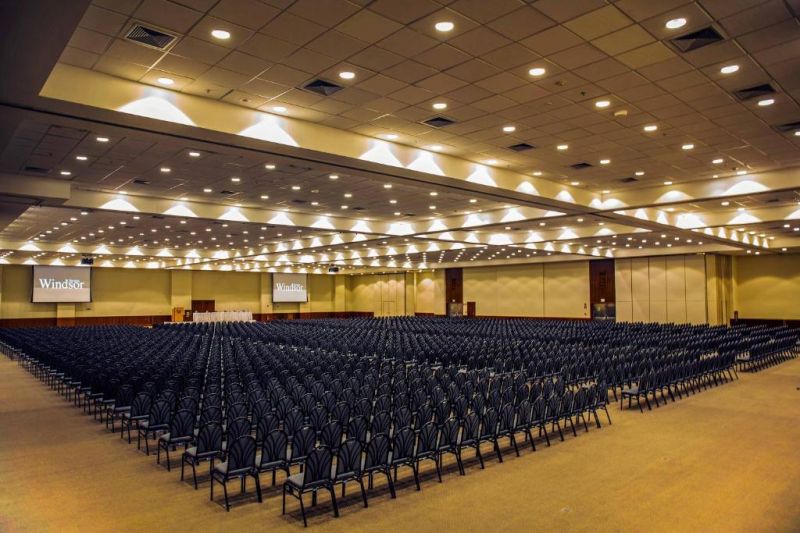
Photo: Diclousure / Windsor Barra Hotel
Venue selection is the foundation of a successful congress, and it should follow your delegate numbers, program structure, and desired delegate experience. The main venue categories in Brazil are:
- Purpose-built convention centers: the strongest option for large congresses, offering modular halls, plenary spaces, breakout rooms, and exhibition areas under one roof.
- Large exhibition pavilions: ideal when the congress includes a significant trade or exhibition component.
- Hotel conference facilities: well suited to mid-sized conferences where keeping delegates, meetings, and accommodation in one place is a priority.
- Unique and non-traditional spaces: historic buildings, cultural venues, and scenic locations that add distinctiveness to gala dinners and special sessions.
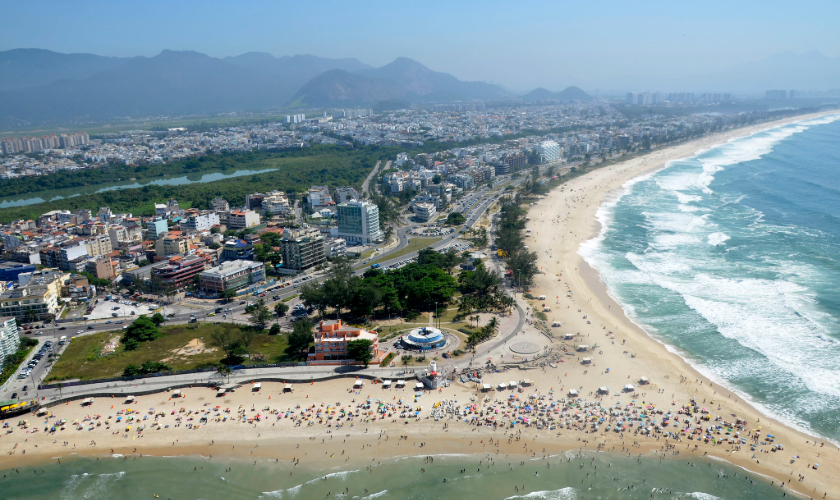
Riocentro in Rio de Janeiro represents the upper tier of Brazilian congress capability. Located in the Barra da Tijuca district, it is widely regarded as Brazil's premier event venue and one of South America's top conference centers. According to its operator GL events, it offers around 87,000 square meters of indoor space across five interconnected pavilions and an integrated convention center, set within a 57-hectare park. It can host congresses and conventions for tens of thousands of delegates, with an on-site five-star hotel, heliport, VIP and press areas, and parking for more than 5,800 vehicles. In São Paulo, São Paulo Expo anchors the country's largest exhibition market and suits trade-heavy congresses.
When evaluating any venue, assess capacity and modularity, the ratio of plenary to breakout space, on-site or adjacent accommodation, airport and public transit access, technical and audiovisual capability, and the venue's experience with events of your type and scale.
3. Building a Realistic Congress Timeline
Large congresses reward early planning. The strongest predictor of a smooth event is how far ahead the core decisions are locked in. A realistic timeline for a significant congress in Brazil looks like this:
- Twelve to eighteen months ahead: define objectives and budget, confirm dates, and secure the primary venue. Premium venues and accommodation blocks for large groups are booked far in advance, especially around high season and major events.
- Nine to twelve months ahead: engage a local DMC, lock accommodation blocks, and begin supplier selection for transport, audiovisual, and catering.
- Six to nine months ahead: finalize the program structure, open registration, and confirm the experiential and social program, including gala dinner and any excursions.
- Three to six months ahead: confirm final logistics, transport schedules, staffing, and contingency plans, and complete supplier contracts.
- Final weeks: confirm final numbers, brief the on-site team, and run through the operational plan in detail.
For significant programs, reaching out to a local partner six to twelve months ahead is the minimum recommended window. The earlier the engagement, the better the venue access, rates, and flexibility.
4. Accommodation Strategy for Large Delegate Groups
Housing a large congress requires securing room blocks across multiple properties, often at different price points to accommodate diverse delegate budgets. Key considerations include proximity to the venue to minimize transfer time, a spread of categories from premium to mid-range, clear cut-off dates and attrition terms in contracts, and coordination of group rates negotiated through local relationships.
This is an area where a local DMC delivers significant value, because negotiating blocks across several hotels and managing the contractual details is complex and benefits enormously from established supplier relationships and local presence.
5. Logistics and Transport
Moving delegates efficiently is one of the defining challenges of a large congress, particularly in a country where distances are significant and a program may span more than one city. The logistics plan should address airport arrivals and transfers, daily transport between hotels and the congress venue, movements for the social and experiential program, and VIP and speaker transport.
Internal flight scheduling deserves particular attention. A local operator knows which domestic routes are reliable, builds in appropriate buffers, and monitors schedules to protect the program against disruption. Contingency planning for delays, weather, and supplier issues is not optional for an event of this scale; it is a core part of professional execution.
6. The Experiential and Social Program
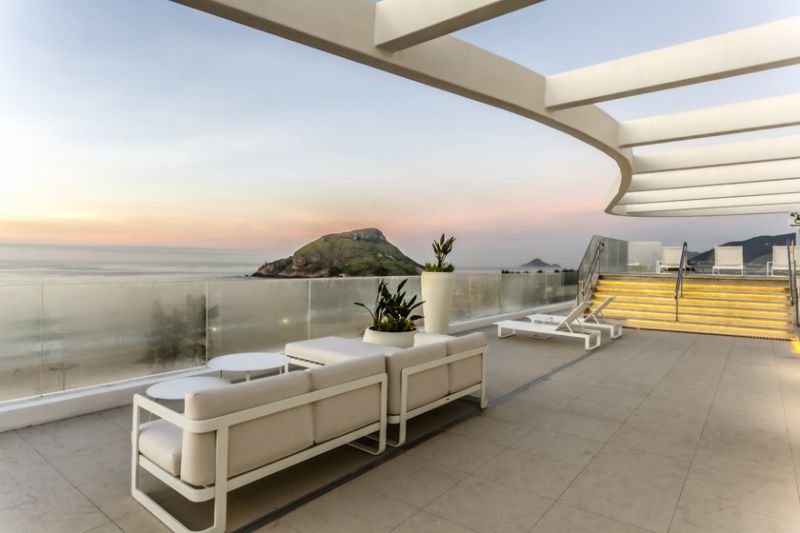
Photo: Diclousure / C Design
A congress is more than its sessions. The social program, including the welcome reception, gala dinner, and optional excursions, shapes how delegates remember the event and the destination. Brazil offers a distinct advantage here, with the ability to stage a gala dinner against iconic scenery or build cultural experiences that immerse delegates in the destination.
The most successful congresses design this experiential layer from the start rather than treating it as an add-on. Authentic cultural immersion, regional gastronomy, and genuine local contact resonate strongly with delegates and elevate the perceived value of the entire event.
7. Common Pitfalls and How to Avoid Them
Most congress problems are predictable and preventable. The most common pitfalls include:
- Booking too late: premium venues and large accommodation blocks sell out far in advance. Late planning forces compromises on quality and cost.
- Ignoring seasonality: scheduling near Carnival, regional festivals, or high season can inflate prices and limit availability. Local calendar awareness is essential.
- Underestimating internal logistics: distances and domestic flight realities catch out planners who treat Brazil as a single compact destination.
- No clear accountability: without a single responsible local point of contact, execution suffers when issues arise.
- Weak contingency planning: events of this scale will encounter surprises. The question is whether the plan absorbs them smoothly.
The common thread is that local expertise prevents nearly all of these problems before they occur. A partner who operates in the destination every day has seen these challenges and built the protocols to handle them.
8. Why a Local DMC Is Essential for Congress Planning
For a congress, a destination management company is not a convenience; it is the operational backbone of the event. The DMC secures and negotiates the venue, manages accommodation blocks across multiple properties, coordinates the full transport operation, staffs the event with local coordinators, and provides the contingency planning that protects the program. Across a country the size of Brazil, this consolidation under one accountable partner is what makes a complex congress executable.
The value of decades of local operation is concrete: better rates secured through trust, access to venues and suppliers unavailable to newcomers, faster problem solving because the team has handled the situation before, and the cultural fluency to design a program that feels authentic to delegates.
Posts you might also be interested in:
- Blumar: The Leading Name in MICE in Brazil
- Destination Management Company Brazil: Why Blumar Leads
- Incentive Travel Operator Brazil
- Best Cities in Brazil for MICE and Corporate Events: A 2026 Comparison
- Behind a Large-Scale Incentive Operation in Brazil: How the Best Programs Are Delivered
Frequently Asked Questions
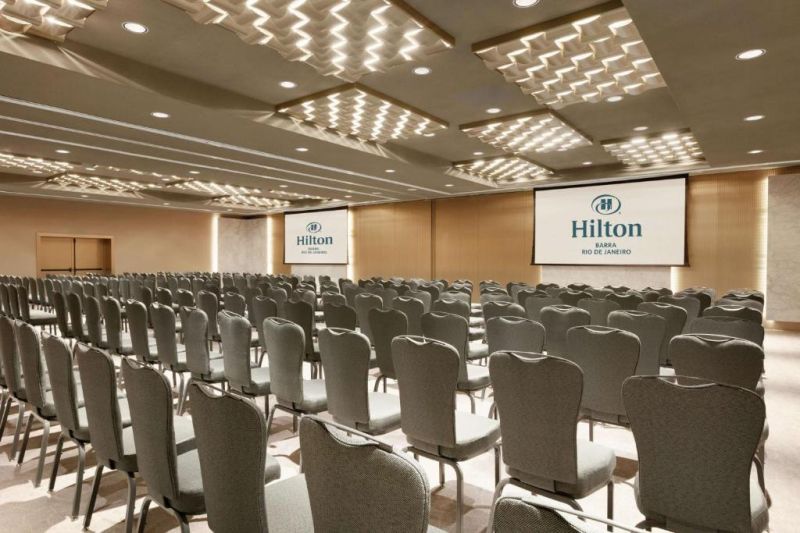
Photo: Disclousure / Hilton Barra Rio de Janeiro
How long does it take to plan a congress in Brazil?
For a significant congress, planning should begin twelve to eighteen months ahead, with venue and date confirmation locked first. Engaging a local DMC six to twelve months ahead is the minimum recommended window to secure the best venues, accommodation, and suppliers.
What is the largest congress venue in Brazil?
Riocentro in Rio de Janeiro is widely regarded as Brazil's premier event venue and one of South America's top conference centers, with around 87,000 square meters of indoor space across five interconnected pavilions (per its operator GL events), able to host congresses for tens of thousands of delegates. São Paulo Expo anchors the country's largest exhibition market.
Where should I host a corporate conference in Brazil?
São Paulo is the strongest choice for large corporate and trade-heavy conferences given its convention infrastructure and connectivity. Rio de Janeiro suits congresses that benefit from iconic scenery and a strong experiential program. Brasília ranks third nationally and suits governmental and association events.
How do I manage accommodation for a large congress in Brazil?
Securing room blocks across multiple properties at different price points, close to the venue, with clear contractual terms, is the standard approach. A local DMC negotiates these blocks and manages the contractual details through established hotel relationships.
Do I need a local partner to host a congress in Brazil?
For a congress of any meaningful scale, a local destination management company is essential. It handles venue negotiation, accommodation, transport, on-site staffing, and contingency planning, consolidating the operation under one accountable partner across a logistically complex country.