Português
 English
 Español
 Français
 Deutsch
 Italiano
 日本語
日本語
 العربية
 中文
中文
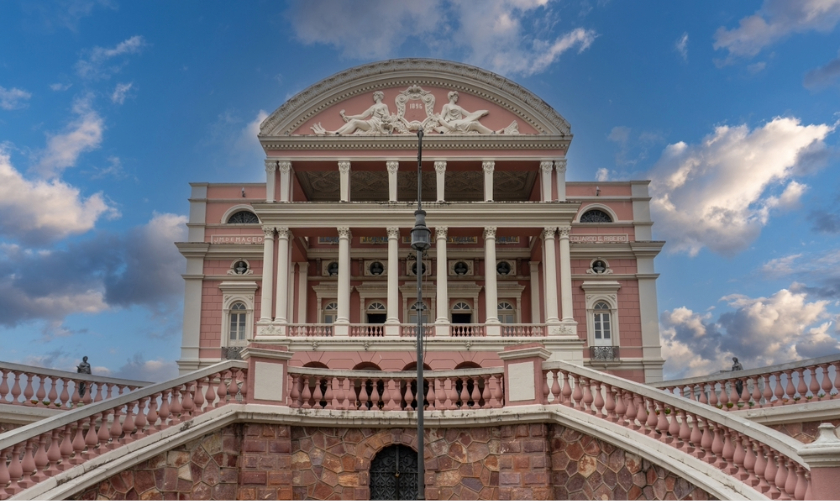
Two of the Amazon’s most iconic landmarks have just earned global recognition. On 27 July 2026, during its 48th session in Busan, South Korea, the UNESCO World Heritage Committee inscribed the Teatro Amazonas in Manaus and the Theatro da Paz in Belém as World Cultural Heritage, under the joint nomination Theatres of the Amazon. It is Brazil’s 26th entry on the World Heritage List.
For travellers, the practical news is simple: two buildings that already appear in most Amazon itineraries now carry the same status as the Lençóis Maranhenses, and both remain open to visitors.
What UNESCO recognised
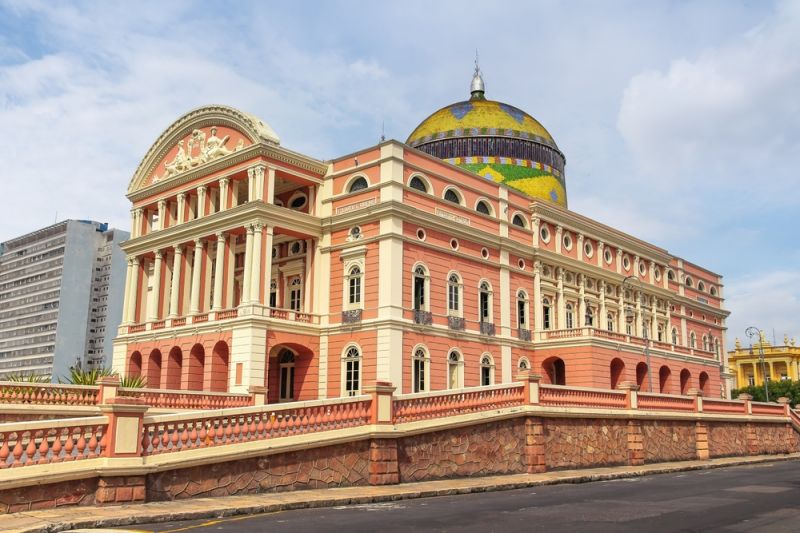
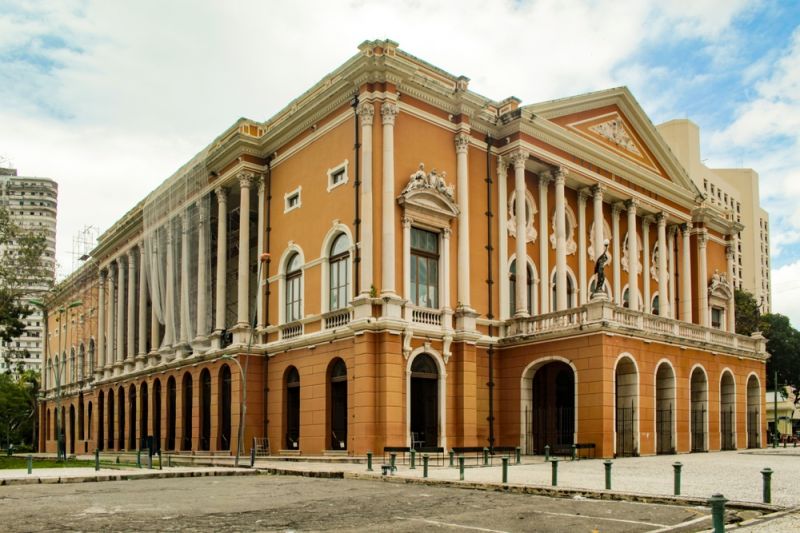
Photos: Diego Grandi and F de Jesus / Shutterstock.com
The inscription is a joint one, covering both opera houses as a single cultural property, and it also extends to the public squares in front of each theatre: Largo de São Sebastião in Manaus and Praça da República in Belém. The committee recognised the pair as a rare concentration of European style civic architecture built deep inside the Amazon.
Two opera houses built by the rubber boom
Both theatres were designed during the golden age of the rubber boom, between 1879 and 1912, as symbols of political and urban ambition. They blend French and European architectural influences with motifs that celebrate the Amazon itself.
The Theatro da Paz opened in Belém in 1878 and played a defining role in establishing the city as a strategic river port and state capital. The Teatro Amazonas was inaugurated in Manaus in 1896 and is famous for its Renaissance style dome, covered with roughly 36,000 ceramic tiles imported from Alsace, in France, at a time when almost everything in the city arrived by ship.
How to include them in an Amazon itinerary
Manaus is the gateway for jungle lodges and river cruises, which means most clients already spend a night in the city before or after the forest. The Teatro Amazonas sits in the historic centre, a short drive from the hotels used on our programmes, and works well as a half day cultural stop combined with the Mercado Adolpho Lisboa and the Ponta Negra waterfront.
In Belém, the Theatro da Paz pairs naturally with the Ver o Peso market and the city’s Amazonian gastronomy scene, which has drawn international attention in recent years.
If you are building a first Amazon programme, our guides on what to do in the Amazon and our three reference jungle lodges cover how to combine city, river and forest without wasting days in transit. Details of the inscription are available on the UNESCO World Heritage Centre website.
Our commitment: Adopting a hyacinth macaw nest

Photo: Felipe Castellari / Refugio Ecológico Caiman
Heritage is not only built. Blumar is a sponsor of the Adote um Ninho campaign, Adopt a Nest, now in its 12th edition covering 2025 and 2026, run by Instituto Arara Azul.
Founded in 2003, the institute grew out of the pioneering work started by Dr Neiva Guedes in 1990 in the Pantanal, and today leads the Hyacinth Macaw Conservation Programme, internationally recognised research protecting Anodorhynchus hyacinthinus across three Brazilian biomes: the Pantanal, the Cerrado and the Amazon.
Through symbolic nest adoption, sponsors help fund the regular monitoring, maintenance and protection of nesting cavities, which are safe havens not only for hyacinth macaws but for more than 40 other species that depend on them.
The 2025 season was an especially strong reproductive year in the Pantanal de Miranda, with 139 eggs recorded and 42 chicks successfully fledged, above the historical average. Of the 127 nests monitored in the region, 29 were adopted in this 12th edition, giving rise to 24 godchildren: 21 hyacinth macaws, 2 laughing falcons and 1 black vulture. Our own adopted nest, number 2440, welcomed a chick this year.
If you would like to adopt a nest, details are available at Instituto Arara Azul. And if the Pantanal itself is on the table, our guide on when to visit the Pantanal explains which season shows the most wildlife.
Talk to your Blumar contact for rates, availability and tailor made itineraries combining Manaus, Belém and the Pantanal.
Posts you might also be interested in:
- 5 Exclusive Experiences You Must Have in the Amazon
- 3 Incredible Jungle Lodges in the Amazon
- Historic Cities of Brazil to Visit on Your Next Vacation
- Pedra Furada in Jalapão
- What Are the Advantages of Hiring a Travel Agency?
FAQ: Teatro Amazonas and Theatro da Paz – UNESCO World Heritage in the Amazon
Photo: Gino Tuesta / Shutterstock.com
1. Are Teatro Amazonas and Theatro da Paz UNESCO World Heritage Sites?
Yes. On 27 July 2026, UNESCO inscribed Teatro Amazonas in Manaus and Theatro da Paz in Belém on the World Heritage List under the joint nomination “Theatres of the Amazon.” The two historic opera houses are recognised together as a single cultural property.
The inscription highlights their architectural, historical and cultural importance and their connection to the development of major Amazonian cities during the rubber boom.
2. What are the “Theatres of the Amazon”?
The Theatres of the Amazon is the UNESCO World Heritage property comprising two landmark Brazilian opera houses:
- Teatro Amazonas, in Manaus, Amazonas;
- Theatro da Paz, in Belém, Pará.
Although located in different cities, UNESCO recognises them jointly because they represent an important period in the economic, cultural and urban history of the Brazilian Amazon.
3. When did the Amazon theatres become UNESCO World Heritage Sites?
The UNESCO World Heritage Committee inscribed the theatres on 27 July 2026, during its 48th session in Busan, South Korea.
The designation made the Theatres of the Amazon Brazil’s 26th entry on the UNESCO World Heritage List.
4. What exactly is included in the UNESCO designation?
The designation covers more than the theatre buildings themselves. It includes the historic public spaces facing them:
- Teatro Amazonas and Largo de São Sebastião in Manaus;
- Theatro da Paz and Praça da República in Belém.
Together, these buildings and urban spaces illustrate the cultural ambitions and transformation of Amazonian cities during the rubber boom.
5. Why did UNESCO recognise Teatro Amazonas and Theatro da Paz?
The two theatres represent a remarkable concentration of European-influenced civic architecture in the heart of the Amazon.
Constructed during the period associated with the Amazon rubber boom, they reflect how the prosperity generated by rubber influenced architecture, culture and urban development in Manaus and Belém.
For travellers, they also provide a fascinating contrast between monumental European-inspired architecture and the tropical environment of the Amazon.
6. When was Teatro Amazonas built?
Teatro Amazonas was inaugurated in 1896 in Manaus. It became one of the most recognisable symbols of the prosperity generated by the rubber boom.
One of its most distinctive features is its Renaissance-style dome, decorated with approximately 36,000 ceramic tiles imported from Alsace, France.
Today, the theatre remains one of the most important cultural attractions in Manaus.
7. When was Theatro da Paz built?
Theatro da Paz opened in 1878 in Belém, making it older than Teatro Amazonas.
Its construction reflected Belém’s growing economic and political importance during the period when the city developed as a strategic Amazonian river port and regional capital.
Today, it is one of the most significant historic buildings in Belém.
8. What does the rubber boom have to do with the two theatres?
The Amazon rubber boom, particularly its golden age between 1879 and 1912, generated enormous wealth in cities such as Manaus and Belém.
That prosperity helped finance ambitious urban projects inspired by European architecture and cultural life. Teatro Amazonas and Theatro da Paz became powerful symbols of this era.
Visiting the theatres therefore offers travellers more than an architectural experience: it provides insight into a period that profoundly transformed the history of the Brazilian Amazon.
9. Can tourists visit Teatro Amazonas?
Yes. Teatro Amazonas remains open to visitors and is one of the essential cultural attractions in Manaus.
Its central location makes it easy to incorporate into a city tour before or after an Amazon jungle lodge stay or river cruise.
Opening hours, guided-tour schedules, performances and admission conditions can change, so travellers should confirm current information when planning their visit.
10. Can tourists visit Theatro da Paz?
Yes. Theatro da Paz in Belém is also open to visitors, allowing travellers to discover its architecture, interiors and cultural history.
As with Teatro Amazonas, visiting conditions and performance schedules may vary, so checking current opening times before travelling is recommended.
11. How can I include Teatro Amazonas in a Manaus itinerary?
Teatro Amazonas is located in the historic centre of Manaus and works particularly well as part of a half-day cultural tour.
A typical itinerary can combine the theatre with other Manaus attractions such as Mercado Adolpho Lisboa. Depending on the programme, travellers can also explore the Ponta Negra waterfront.
This makes the theatre an easy addition to an Amazon itinerary involving jungle lodges, wildlife experiences or river cruises.
12. How can I include Theatro da Paz in a Belém itinerary?
Theatro da Paz can be combined with some of Belém’s best-known cultural and gastronomic attractions.
One particularly natural pairing is the Ver-o-Peso market, where travellers can experience ingredients, aromas, flavours and traditions closely associated with the Amazon.
This combination makes Belém an appealing destination for travellers interested in Amazonian culture, architecture and gastronomy, rather than seeing the region exclusively through its natural landscapes.
13. Is it worth visiting both Manaus and Belém?
Yes, especially for travellers looking for a broader understanding of the Amazon.
Manaus is an important gateway to jungle lodges, river cruises and rainforest experiences, while Belém offers a distinctive combination of history, Amazonian gastronomy, markets and cultural heritage.
Visiting both UNESCO-listed theatres also provides an opportunity to compare how the rubber boom influenced two of the Amazon region’s most important cities.
14. How many days should I spend in Manaus and Belém?
The ideal length depends on the wider itinerary. Travellers using Manaus primarily as a gateway to the rainforest can often incorporate Teatro Amazonas into a half-day city experience before or after their jungle stay.
Belém can also be incorporated into a larger northern Brazil itinerary, particularly for travellers interested in history, architecture and food.
For a more complete Amazon journey, an itinerary can combine Manaus, Belém, river experiences and jungle lodges, allowing enough time for both cultural and nature-focused activities.
15. What other UNESCO World Heritage Sites can travellers visit in Brazil?
Brazil has a diverse collection of UNESCO World Heritage properties encompassing cultural landmarks, historic cities and exceptional natural environments.
Among the country’s internationally recognised destinations is Lençóis Maranhenses, known for its extraordinary landscape of white dunes and seasonal freshwater lagoons.
The recognition of the Theatres of the Amazon further strengthens the Amazon’s appeal as a destination where remarkable natural heritage exists alongside significant cultural and architectural history.
16. What is Blumar’s connection to the Adopt a Nest campaign?
Blumar sponsors Adote um Ninho (Adopt a Nest), an initiative run by Instituto Arara Azul.
Through symbolic nest adoption, sponsors contribute to the monitoring, maintenance and protection of nesting cavities used by hyacinth macaws (Anodorhynchus hyacinthinus) and other wildlife.
Blumar’s adopted nest is number 2440, which welcomed a chick during the 2025 season.
17. What is Instituto Arara Azul?
Instituto Arara Azul is a Brazilian conservation organisation founded in 2003 and rooted in pioneering research begun by Dr Neiva Guedes in 1990 in the Pantanal.
The institute leads the Hyacinth Macaw Conservation Programme, supporting research and conservation of the species across the Pantanal, Cerrado and Amazon biomes.
Its work includes monitoring and protecting nesting sites that are also important to many other animal species.
18. What were the results of the 2025 Adopt a Nest season?
The 2025 season in the Pantanal de Miranda recorded encouraging reproductive results.
A total of 127 nests were monitored, including 29 adopted nests. Researchers recorded 139 eggs and 42 successfully fledged chicks.
The programme also reported 24 “godchildren” associated with adopted nests: 21 hyacinth macaws, two laughing falcons and one black vulture.
19. Why is protecting hyacinth macaw nests important?
Suitable nesting cavities are essential for the reproduction of hyacinth macaws. Protecting and monitoring these sites helps researchers understand breeding success and contributes to the long-term conservation of the species.
The impact extends beyond hyacinth macaws: the monitored nesting cavities can provide shelter or breeding sites for more than 40 other species, making nest conservation valuable to the wider ecosystem.
20. Can I combine the Amazon and Pantanal in one Brazil itinerary?
Yes. Combining the Amazon and Pantanal creates a particularly diverse nature and culture itinerary.
For example, travellers can experience the UNESCO-listed theatres and urban heritage of Manaus and Belém, continue into the Amazon for river and rainforest experiences, and then visit the Pantanal for wildlife observation and conservation-focused activities.
Such an itinerary showcases several different dimensions of Brazil: architecture, history, Amazonian culture, rainforest, rivers, biodiversity and wildlife conservation.
21. How can travellers plan a tailor-made Amazon itinerary?
A tailor-made itinerary can combine Manaus, Belém, Amazon jungle lodges, river cruises and the Pantanal according to available time and individual interests.
Blumar can organise programmes that balance cultural experiences such as Teatro Amazonas and Theatro da Paz with nature, wildlife, gastronomy and conservation experiences, while planning transfers and overnight stays efficiently.
For current rates, availability and tailor-made itineraries, travellers can contact Blumar directly.