Português
 English
 Español
 Français
 Deutsch
 Italiano
 日本語
日本語
 العربية
 中文
中文
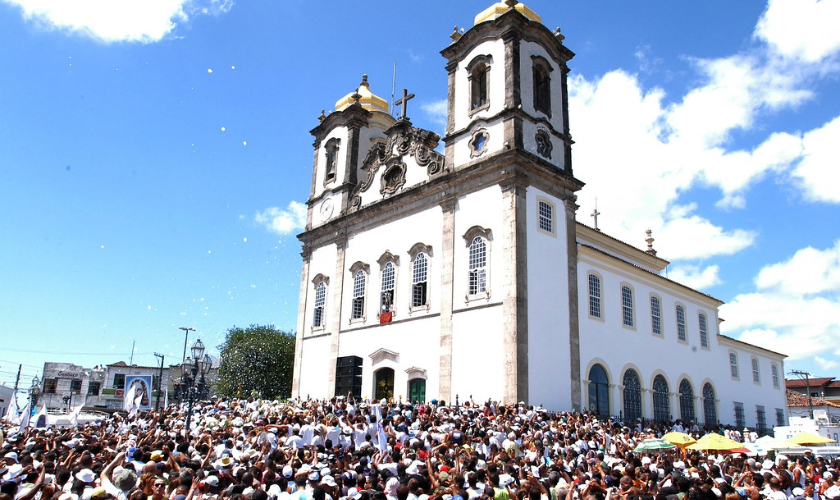
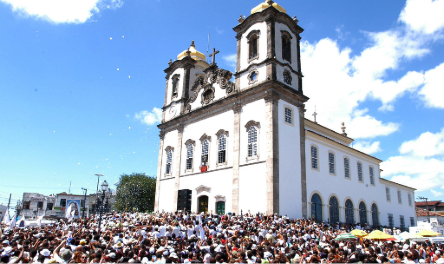
Few celebrations capture the identity of Salvador as powerfully as the Lavagem do Bonfim. Faith, ancestry, music, spirituality, popular tradition, and the streets of the Lower City come together in one of Bahia’s most iconic cultural celebrations.
Held in January, the celebration brings together thousands of locals and visitors for a procession to the Basílica Santuário Senhor do Bonfim, atop the Sacred Hill. In 2026, for example, the procession covered approximately eight kilometers (five miles), culminating in one of the festival’s most symbolic moments: the traditional ritual washing with scented water performed by the baianas in the square in front of the Basilica.
But the Lavagem do Bonfim is much more than a major event on Salvador’s tourism calendar. To understand its significance, it is necessary to explore a centuries-old history that reveals the convergence of different religious and cultural traditions.
What Is the Lavagem do Bonfim?
The Lavagem do Bonfim is part of the Festa do Senhor Bom Jesus do Bonfim, a traditional celebration held in Salvador since the 18th century. According to Brazil’s National Institute of Historic and Artistic Heritage (Iphan), the festival has been held annually since 1745 and brings together elements of Catholic and Afro-Brazilian traditions, along with various expressions of the culture and social life of Bahia’s capital.
The religious program extends well beyond the famous procession. It includes novenas, religious services, popular festivities, and other rituals associated with devotion to Senhor do Bonfim.
The washing ceremony, however, is the moment that has gained the greatest popular and touristic prominence.
Baianas dressed in white walk through the streets carrying vessels filled with scented water. Upon reaching the Sacred Hill, they perform the ritual that gives the celebration its name.
It is a striking scene. But it is also a living cultural heritage, rich in historical meaning.
What Is the Origin of the Lavagem do Bonfim?
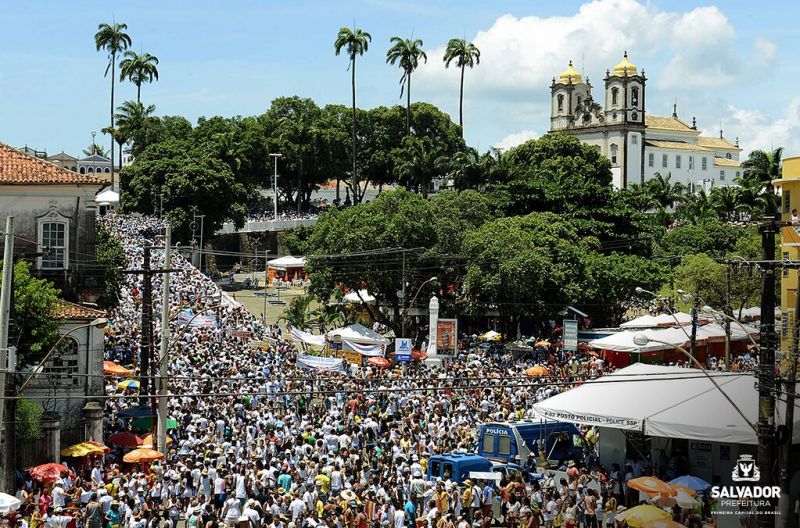
Photo: Valter Pontes / Prefeitura de Salvador
Lavagem do Bonfim: A Centuries-Old Tradition
Devotion to Senhor do Bonfim in Salvador dates back to the 18th century. The tradition of the washing ceremony began later.
According to historical information compiled by Brazil’s Ministry of Tourism, the washing tradition began in 1773, when enslaved people were tasked with cleaning the church before the religious festivities. Over time, the custom was reinterpreted and incorporated elements of African-derived religious traditions, becoming associated with the Águas de Oxalá ritual as well.
When washing the interior of the church was no longer permitted, the ritual moved to the steps and the square in front of the church.
This transformation helps explain why the celebration holds such a distinctive meaning. The Lavagem do Bonfim is not simply a tradition preserved exactly as it began. It has acquired new meanings throughout its history.
The Convergence of Different Religious Traditions
One of the best-known aspects of the Lavagem do Bonfim is the dialogue between Catholic practices and Afro-Brazilian religious traditions.
In Bahia’s popular tradition, devotion to Senhor do Bonfim has historically been associated with Oxalá. The white clothing worn by the baianas and many other participants has become one of the celebration’s most recognizable images.
Iphan itself notes that the Festa do Senhor Bom Jesus do Bonfim incorporates Catholic rituals and elements of Afro-Brazilian origin, creating a cultural interweaving deeply connected to Salvador’s identity.
For visitors, understanding this context is essential.
Taking part in the festival is not simply about joining a procession. It means witnessing a cultural tradition shaped by different communities over generations.
The Festa do Bonfim Is Part of Brazil’s Cultural Heritage
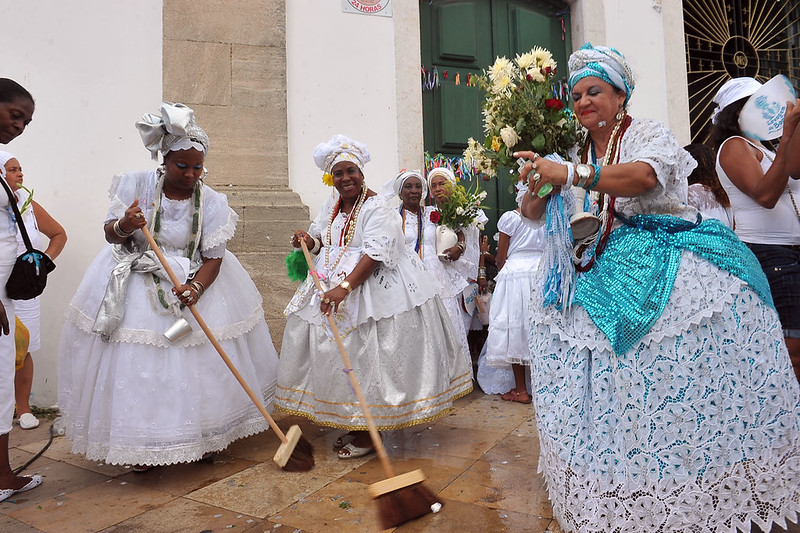
Photo: Max Haack / Prefeitura de Salvador
The significance of the celebration extends far beyond Bahia.
In 2013, the Festa do Senhor Bom Jesus do Bonfim was officially recognized by Iphan as part of Brazil’s Cultural Heritage and entered in the Registry of Celebrations.
The recognition reflects the festival’s historical continuity, its importance to the communities that have shaped Brazilian society, and its role as a cultural reference.
It is precisely this dimension that makes the experience so fascinating for travelers who want to discover Salvador beyond its postcard attractions.
Here, heritage does not simply mean admiring a historic building. It means watching a living tradition unfold before your eyes.
What Is the Lavagem do Bonfim Like in Salvador?
The big day begins early.
Traditionally, participants gather near the Basílica de Nossa Senhora da Conceição da Praia, in the Comércio district. From there, the procession makes its way through the streets of the Lower City toward the Sacred Hill.
In 2026, the route covered approximately eight kilometers (five miles).
Along the way, Salvador takes on an entirely different atmosphere. Baianas, cultural groups, local residents, religious participants, and visitors share the streets during the long procession.
Some of the main elements of the experience include:
- Baianas traditionally dressed in white;
- Scented water and flowers;
- Expressions of faith and gratitude;
- Music and cultural groups;
- Participation by locals and visitors;
- Arrival at the Sacred Hill;
- The symbolic washing in the square in front of the Basilica.
The route also offers a glimpse of another side of Salvador: the Lower City, its neighborhoods, its architecture, and the relationship local residents have with a tradition that has been part of the city’s calendar for generations.
Why Experience the Lavagem do Bonfim?
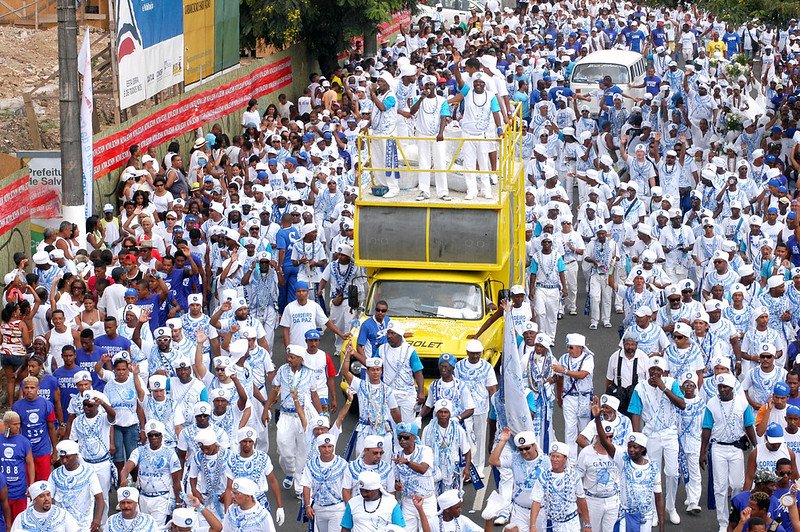
Photo: Disclousure / Prefeitura de Salvador
A Cultural Experience That Goes Far Beyond Conventional Tourism
Visitors to Salvador usually want to explore Pelourinho, experience Bahian cuisine, visit the city’s historic churches, and enjoy beaches such as Porto da Barra and Flamengo.
All of these deserve a place on the itinerary.
But experiencing the Lavagem do Bonfim offers something different: the opportunity to see the city come alive.
This is not a performance staged exclusively for tourists. It is a tradition deeply connected to the local community.
That is precisely what makes the experience so special.
For a few hours, travelers are no longer simply spectators; they accompany Salvador during one of its great collective celebrations.
Tips for Experiencing the Lavagem do Bonfim
Because the celebration attracts thousands of people and involves a long walk, a little planning can make a significant difference.
What Should You Wear to the Lavagem do Bonfim?
White is traditional and can be seen everywhere during the celebration. Lightweight clothing is also recommended because of Salvador’s summer heat.
Consider bringing:
- Lightweight, breathable clothing;
- Sneakers or comfortable shoes;
- A hat or cap;
- Sunscreen;
- A water bottle;
- Only a few personal belongings.
January is summer in Bahia, and much of the experience takes place outdoors.
Do You Have to Walk the Entire Route?
Not necessarily.
The traditional procession covers approximately eight kilometers (five miles), so completing the entire route requires a fair amount of stamina. Travelers can adapt the experience according to their age, mobility, and physical condition.
This is one of those situations in which specialized travel planning can be especially helpful.
Arrive Early
Schedules and operational arrangements may change from one year to the next. In addition, streets are closed and traffic patterns are significantly affected.
Before your trip, always check the official schedule and guidelines issued by local authorities.
Make the Most of Your Trip and Discover Salvador
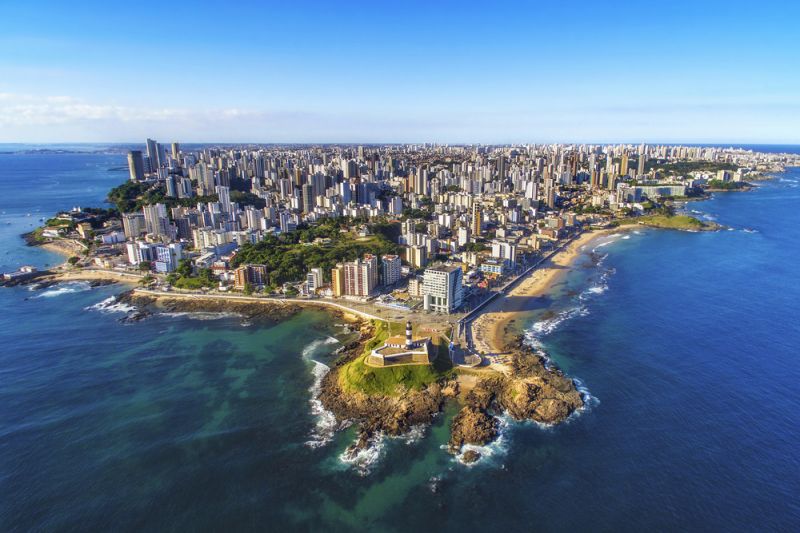
Photo: R.M. Nunes / Shutterstock.com
The Lavagem do Bonfim can be the centerpiece of a much more comprehensive trip.
Travelers already in Salvador can take the opportunity to discover the city’s many different sides.
An itinerary can combine the celebration with places such as:
- Bonfim Church and the surrounding area;
- Mercado Modelo;
- Elevador Lacerda;
- Pelourinho;
- Church of São Francisco;
- Farol da Barra;
- Porto da Barra;
- Rio Vermelho;
- Museum of Modern Art of Bahia.
It is also worth setting aside time for the local cuisine. Acarajé, abará, moquecas, and other flavors tell the story of Bahia’s culture just as vividly as its monuments do.
And for travelers with a few extra days, Salvador can be combined with Praia do Forte and Bahia’s North Coast, creating a trip that balances heritage, culture, and beach time.
When Does the Lavagem do Bonfim Take Place?
The celebration takes place in January as part of the Festa do Senhor Bom Jesus do Bonfim.
Exact dates and schedules should be checked for each year. For example, in 2026, the Lavagem do Bonfim took place on Thursday, January 15.
Travelers planning a trip specifically to attend the festival should arrange accommodations and services well in advance.
Salvador already attracts large numbers of visitors during the summer, and traditional events further increase demand for hotels and transportation during certain periods.
Experience the Lavagem do Bonfim with Blumar DMC
Taking part in a major popular celebration requires different logistics from those involved in a conventional sightseeing tour.
There are traffic changes, large crowds, and cultural traditions that need to be understood and respected.
This is where Blumar DMC’s expertise can make a difference.
With extensive knowledge of destinations throughout Brazil and a network of carefully selected suppliers, Blumar can create customized itineraries that combine the Lavagem do Bonfim with other attractions in Salvador and throughout Bahia.
Planning can take into account travelers’ profiles, length of stay, accommodation category, tours, transfers, and extensions to destinations such as Praia do Forte.
For travelers who want to experience such an important cultural tradition, careful planning means having more time for what truly matters: observing, learning, experiencing, and enjoying Salvador.
Lavagem do Bonfim: A Tradition That Lets You Experience the True Spirit of Salvador
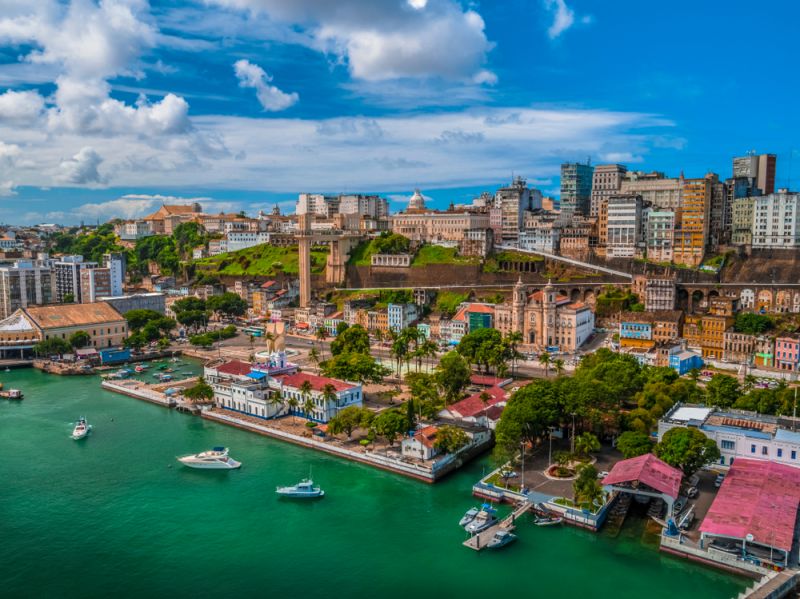
Photo: Peu Ribeiro / Shutterstock.com
Experiencing the Lavagem do Bonfim means discovering a Salvador that cannot be captured in photographs alone.
It means following a centuries-old tradition through the streets. It means seeing the baianas dressed in white. It means understanding how different cultural traditions helped shape one of Bahia’s most important celebrations.
Recognized as part of Brazil’s Cultural Heritage, the Festa do Senhor Bom Jesus do Bonfim demonstrates how history, spirituality, and identity remain alive and continue to evolve.
And perhaps that is the most compelling reason to include this experience in your trip: not simply to visit Salvador, but to experience one of its most deeply rooted traditions.
Would you like to experience the Lavagem do Bonfim and discover Salvador with an itinerary planned down to the last detail? Contact Blumar DMC and plan a customized journey through Bahia, combining culture, history, cuisine, and authentic experiences.
Posts you might also be interested in:
- What Is the Best Month to Visit Salvador? An Unforgettable Trip with Blumar DMC
- What Not to Miss in Salvador: A Complete Guide to an Unforgettable Trip
- How many days are enough to explore Salvador
- Salvador and Praia do Forte in the Spotlight: Our Team's Deep Dive into Two of Bahia's Top Destinations
- Where to Stay in Salvador: 6 Hotels Reviewed by Our Inspection Team
FAQ: Lavagem do Bonfim in Salvador

Photo: Max Haack / Prefeitura de Salvador
1. What is the Lavagem do Bonfim?
The Lavagem do Bonfim is one of Salvador’s most important cultural and religious celebrations. Held as part of the Festa do Senhor Bom Jesus do Bonfim, it brings together Catholic and Afro-Brazilian traditions in a major procession through Salvador’s Lower City, culminating in the symbolic washing with scented water in front of the Basílica Santuário Senhor do Bonfim.
2. When does the Lavagem do Bonfim take place?
The Lavagem do Bonfim takes place every January in Salvador, Bahia. The exact date varies from year to year as part of the Festa do Senhor Bom Jesus do Bonfim. In 2026, the Lavagem do Bonfim took place on Thursday, January 15.
Travelers planning their trip around the celebration should always check the official schedule for the year of their visit.
3. Where does the Lavagem do Bonfim take place?
The traditional procession begins near the Basílica de Nossa Senhora da Conceição da Praia, in Salvador’s Comércio district, and continues through the Lower City toward the Basílica Santuário Senhor do Bonfim, located on the Sacred Hill.
The final ritual takes place in the square in front of the Basilica.
4. How long is the Lavagem do Bonfim procession?
In 2026, the procession covered approximately eight kilometers (five miles) between its starting point and the Sacred Hill.
Visitors do not necessarily have to complete the entire route. The experience can be adapted according to age, mobility, physical condition, and individual interests.
5. What happens during the Lavagem do Bonfim?
Thousands of participants walk through Salvador’s Lower City toward the Bonfim Basilica. Along the route, visitors can see baianas dressed in white, flowers, vessels containing scented water, cultural groups, music, expressions of faith, and popular celebrations.
One of the most symbolic moments occurs at the Sacred Hill, where baianas perform the traditional ritual washing with scented water in the square in front of the Basilica.
6. What is the origin of the Lavagem do Bonfim?
The Festa do Senhor Bom Jesus do Bonfim has been celebrated in Salvador since the 18th century. According to historical information compiled by Brazil’s Ministry of Tourism, the washing tradition dates to 1773, when enslaved people were tasked with cleaning the church before religious festivities.
Over time, the practice acquired new meanings and incorporated elements associated with African-derived religious traditions, becoming one of Salvador’s most recognizable cultural celebrations.
7. Why is the Lavagem do Bonfim important to Salvador?
The Lavagem do Bonfim represents centuries of history, spirituality, cultural exchange, and popular tradition. It reflects the convergence of Catholic and Afro-Brazilian traditions that have played an important role in shaping Salvador’s cultural identity.
For visitors, the celebration offers an opportunity to experience a living tradition rather than simply visit a historic attraction.
8. What is the connection between Senhor do Bonfim and Oxalá?
In Bahia’s popular religious tradition, devotion to Senhor do Bonfim has historically been associated with Oxalá, an important orixá in Afro-Brazilian religions.
This cultural and religious interweaving is one of the defining characteristics of the Festa do Bonfim. White clothing, widely worn by baianas and participants, has also become one of the celebration’s most recognizable visual elements.
9. Is the Festa do Bonfim part of Brazil’s Cultural Heritage?
Yes. In 2013, the Festa do Senhor Bom Jesus do Bonfim was officially recognized by Brazil’s National Institute of Historic and Artistic Heritage (Iphan) as part of Brazil’s Cultural Heritage and entered in the Registry of Celebrations.
The recognition highlights the festival’s historical continuity and importance as a cultural reference for Brazilian society.
10. Can tourists participate in the Lavagem do Bonfim?
Yes. Visitors can experience the Lavagem do Bonfim alongside local residents, cultural groups, and religious participants.
However, travelers should remember that this is a living cultural and religious tradition rather than an event created exclusively for tourism. Respecting local customs, religious practices, participants, and ceremonial moments is essential.
11. What should I wear to the Lavagem do Bonfim?
White clothing is traditional and widely worn during the celebration. Because January is summer in Salvador, lightweight and breathable clothing is recommended.
Comfortable walking shoes are particularly important. Visitors should also consider bringing sunscreen, a hat or cap, water, and only essential personal belongings.
12. Do I have to wear white to the Lavagem do Bonfim?
White is strongly associated with the Lavagem do Bonfim and is traditionally worn by many participants, especially the baianas. Visitors will therefore see white clothing throughout the procession.
For travelers, wearing lightweight white clothing can be a respectful way to connect with the atmosphere of the celebration while remaining comfortable in Salvador’s summer weather.
13. Do visitors have to walk the entire Lavagem do Bonfim route?
No. Although completing the traditional procession can be an important part of the experience, visitors do not necessarily need to walk the entire route.
Travelers with limited mobility, older visitors, families, or anyone who prefers a shorter experience can plan their participation around specific sections of the celebration.
14. Is the Lavagem do Bonfim suitable for senior travelers?
It can be, provided the experience is carefully planned. The full procession involves a long walk, summer heat, large crowds, and temporary changes to traffic and transportation.
Senior travelers may prefer to experience only part of the route or arrange transportation and assistance according to their mobility and comfort requirements.
15. What should travelers bring to the Lavagem do Bonfim?
Visitors should prioritize comfort and carry as little as possible. Useful items include:
- Lightweight and breathable clothing;
- Comfortable walking shoes;
- Sunscreen;
- A hat or cap;
- Drinking water;
- Essential personal items only.
Because the celebration takes place outdoors during Salvador’s summer, sun protection and hydration are especially important.
16. Should I arrive early for the Lavagem do Bonfim?
Yes. The Lavagem do Bonfim attracts thousands of participants, and streets along the procession route may be closed or subject to significant traffic changes.
Arriving early can make it easier to reach the desired area and experience the atmosphere before the procession becomes more crowded.
Official schedules, transportation arrangements, and local authority guidelines should always be checked shortly before the event.
17. Where should I stay in Salvador for the Lavagem do Bonfim?
The ideal location depends on the traveler’s overall itinerary. Staying in areas with convenient access to Salvador’s main attractions can make it easier to combine the Lavagem do Bonfim with sightseeing, restaurants, beaches, and cultural experiences.
Because January is part of Salvador’s busy summer season, booking accommodations well in advance is recommended, especially for travelers visiting specifically for the festival.
18. What else can I visit in Salvador during the Lavagem do Bonfim?
A trip centered around the Lavagem do Bonfim can also include many of Salvador’s most important attractions, such as Mercado Modelo, Elevador Lacerda, Pelourinho, the Church of São Francisco, Farol da Barra, Porto da Barra, Rio Vermelho, and the Museum of Modern Art of Bahia.
Visitors can also spend more time exploring the Bonfim area and other historic neighborhoods of the Lower City.
19. What traditional Bahian foods should I try during my trip?
Salvador is an excellent destination for experiencing Bahian cuisine. Travelers can try specialties such as acarajé, abará, moqueca, vatapá, and other dishes influenced by the city’s African, Indigenous, and Portuguese cultural heritage.
Combining the Lavagem do Bonfim with Salvador’s culinary experiences can provide a broader understanding of Bahia’s culture.
20. Can I combine Salvador and Praia do Forte on the same trip?
Yes. Salvador and Praia do Forte work particularly well together in a Bahia itinerary. Travelers can experience Salvador’s history, culture, cuisine, and celebrations before continuing to Praia do Forte and Bahia’s North Coast for beaches and nature.
This combination is especially attractive for visitors who want to balance cultural immersion with relaxation.
21. How far in advance should I plan a trip for the Lavagem do Bonfim?
Planning early is recommended. January is a popular travel period in Salvador, and major traditional celebrations can increase demand for hotels, transportation, guides, and other travel services.
Travelers visiting specifically for the Lavagem do Bonfim should ideally organize accommodations and logistics well ahead of their arrival.
22. Why include the Lavagem do Bonfim in a Salvador itinerary?
The Lavagem do Bonfim offers travelers the opportunity to experience Salvador beyond its conventional tourist attractions. It brings together history, spirituality, music, community participation, Afro-Brazilian heritage, and popular culture in a tradition that has evolved over centuries.
For visitors interested in authentic cultural experiences, it provides a unique perspective on Salvador and Bahia.
23. Can Blumar DMC organize a trip around the Lavagem do Bonfim?
Yes. Blumar DMC can create customized itineraries that combine the Lavagem do Bonfim with other experiences in Salvador and Bahia.
Travel planning can take into account accommodation preferences, transfers, sightseeing, length of stay, traveler profiles, mobility requirements, and extensions to destinations such as Praia do Forte.
24. Why plan the Lavagem do Bonfim experience with Blumar DMC?
Major popular celebrations involve logistics that differ from conventional sightseeing, including large crowds, street closures, transportation changes, and specific cultural considerations.
With extensive destination knowledge and a network of carefully selected suppliers, Blumar DMC can help travelers organize a more comfortable and well-planned experience while allowing them to focus on discovering Salvador and the cultural significance of the Lavagem do Bonfim.