Português
 English
 Español
 Français
 Deutsch
 Italiano
 日本語
日本語
 العربية
 中文
中文

The terms DMC, travel agency, and PCO are often used loosely, and the confusion costs planners time and money. Each plays a distinct role in the event and travel industry, and choosing the wrong type of partner, or assuming one covers another's responsibilities, leads to gaps in execution. Understanding who does what is the first step to building the right team for a program in Brazil.
This guide explains the role of each, how they differ, how they work together, and which partner you actually need depending on your program. It is written for corporate event teams, associations, and international agencies planning meetings, incentives, conferences, or events in Brazil.
What a DMC Does
A Destination Management Company is a professional services firm based in the destination that plans, coordinates, and executes the ground operation of travel programs and events. The DMC is the local operational partner inside the country, working business to business on behalf of clients based elsewhere.
A full-service DMC handles itinerary and program design, venue sourcing and negotiation, ground logistics and transport, supplier management, on-site coordination, and the curation of experiences. Its defining characteristic is deep local knowledge and established supplier relationships within the destination. In Brazil, this means a DMC knows the venues, the reliable suppliers, the seasonality, and the cultural context that make a program succeed.
What a Travel Agency Does
A travel agency primarily sells travel products and services, often directly to end consumers or corporate travel departments. Its core function is booking and intermediation: flights, accommodation, and packages.
Travel agencies are oriented toward the transactional side of travel. A corporate travel agency, for example, manages business travel bookings and policy for a company's employees. While some agencies offer event services, their fundamental role is distinct from the on-the-ground operational execution that defines a DMC. A travel agency typically owns the relationship with the traveler; a DMC typically serves the agency, corporate client, or organizer.
What a PCO Does
A Professional Congress Organizer specializes in the planning and management of congresses, conferences, and large association events. The PCO focuses on the conference itself: the scientific or professional program, abstract and speaker management, registration and delegate administration, sponsorship and exhibition sales, and the overall coordination of the event's content and commercial structure.
The PCO's expertise is in the architecture of a congress, particularly the academic, association, and scientific events that form a major part of Brazil's international event calendar. Where a DMC manages the destination experience and logistics, a PCO manages the congress as an organizational and commercial entity.
The Key Differences at a Glance
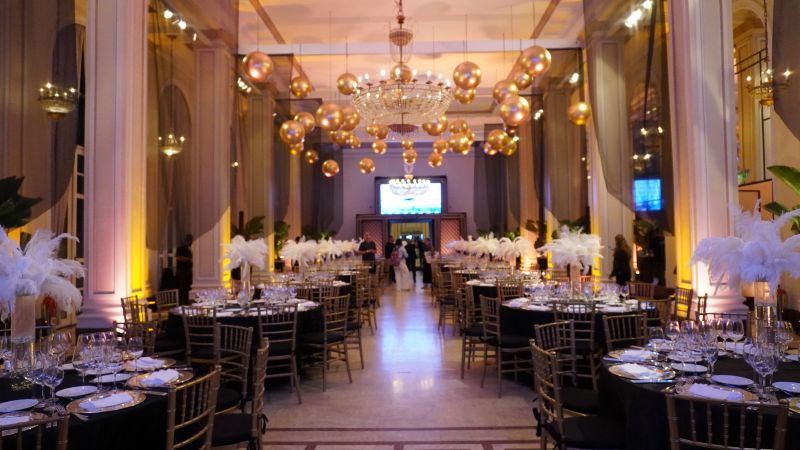
Photo: Guilherme Ferreira / Blumar DMC
The simplest way to distinguish the three is by their core focus:
- DMC: the destination. Local execution, logistics, venues, suppliers, and experiences on the ground.
- Travel Agency: the booking. Flights, accommodation, and travel products, often for end consumers or corporate travel.
- PCO: the congress. Program, registration, abstracts, sponsorship, and the organizational structure of a conference.
Another useful distinction is the client relationship. A DMC works business to business, serving organizers and agencies. A travel agency often works directly with travelers. A PCO works with associations, scientific societies, and congress owners.
How They Work Together
These roles are not mutually exclusive; on a large event they frequently work in concert. A typical international congress in Brazil might involve a PCO managing the scientific program and registration, a DMC handling the local logistics, venue coordination, transport, social program, and delegate experiences, and travel agencies or corporate travel managers handling the bookings that bring delegates to the country.
The most capable operators blur these lines productively. A strong DMC in Brazil, for example, often delivers congress organization capabilities alongside its destination management, allowing a single accountable partner to cover both the logistics and significant elements of the congress structure. This consolidation reduces the number of relationships a planner must manage and the number of seams where things can go wrong.
Which Partner Do You Actually Need?
The right partner depends on what you are organizing:
- Incentive program or corporate event in Brazil: a DMC, for local execution, experiences, and logistics.
- Scientific or association congress: a PCO for the program structure, almost always paired with a DMC for the destination operation.
- Simple group travel or bookings: a travel agency or corporate travel manager may suffice.
- Complex program combining a conference with experiences: a DMC with congress capabilities, or a DMC and PCO working together.
For nearly any program that touches the ground in Brazil, a DMC is the foundational partner, because someone has to execute locally regardless of who manages the bookings or the program content.
Why the Local DMC Is the Anchor in Brazil

Photo: Guilherme Ferreira / Blumar DMC
Across a country the size of Brazil, the local DMC is the anchor of the operation because it is the one partner physically present and accountable on the ground. It secures and negotiates venues, coordinates transport across significant distances, manages local suppliers, staffs the event, and provides the contingency planning that protects the program. The value of decades of local operation is concrete: access, relationships, rates, and the cultural fluency that no remote partner can replicate.
This is why, whatever combination of partners a program requires, the choice of local DMC is the decision that most determines whether the event succeeds.
Build the Right Team for Your Brazil Event
Understanding who does what is the first step; the next is choosing a local partner with the expertise to anchor your program and advise on the full team you need. The right DMC turns a confusing landscape of roles into a single, accountable point of execution.
To discuss your program and the right structure for it, or to request a proposal, visit the official Blumar DMC website.
Posts you might also be interested in:
- Destination Management Company Brazil: Why Blumar Leads
- Incoming Operator Brazil: Why Blumar
- Blumar: The Leading Name in MICE in Brazil
- Sustainability in Brazilian MICE: What Event Planners Should Demand in 2026
- MICE in Brazil: The Complete Guide to Meetings, Incentives, Conferences and Events in 2026
Frequently Asked Questions

Photo: Guilherme Ferreira / Blumar DMC
What is the difference between a DMC and a travel agency?
A travel agency primarily sells travel products such as flights and accommodation, often directly to consumers or corporate travel departments. A DMC is a destination-based firm that executes the local operation of events and programs business to business, handling logistics, venues, suppliers, and experiences on the ground.
What does a PCO do that a DMC does not?
A PCO, or Professional Congress Organizer, focuses on the congress itself: the scientific or professional program, registration and delegate management, abstracts, and sponsorship. A DMC focuses on the destination operation: logistics, venues, transport, and experiences. On large congresses they often work together.
Do I need both a DMC and a PCO for a congress in Brazil?
For a scientific or association congress, pairing a PCO for the program structure with a DMC for the local operation is common and effective. Some strong DMCs in Brazil also offer congress organization capabilities, allowing a single partner to cover both.
Which partner should I contact first for an event in Brazil?
For nearly any program that takes place on the ground in Brazil, a DMC is the foundational partner to engage, because local execution is required regardless of who manages bookings or program content. The DMC can then advise on whether a PCO or other partners are needed.
Can one company act as DMC, PCO, and handle travel?
Capable operators often cover multiple functions, particularly combining DMC and congress organization. Consolidating roles under one accountable partner reduces complexity and the number of points where coordination can fail, though specialized events may still benefit from a dedicated